
- The Evolution of Dental Implant Surgery
- Step 1: Seeing the Unseen with CBCT Scans
- Step 2: Ditching the Goop with Digital Impressions
- Step 3: Virtual Planning and 3D Imaging
- Step 4: The Power of Digitally Guided Surgery
Getting a dental implant is one of the best ways to restore a missing tooth. The procedure offers a permanent, natural-looking solution that restores your confidence and your bite. However, the process of placing a titanium post into your jawbone requires incredible precision.
In the past, dentists relied on basic tools and their own visual estimation to perform this surgery. Now, cutting-edge digital technology has completely transformed the patient experience. Advanced imaging and computer-guided systems allow us to plan every single millimeter of your surgery before you even sit in the dental chair.
Understanding how we use these tools can help alleviate any anxiety you might feel about the procedure. This guide explores the fascinating digital workflow behind modern implant dentistry. We will break down exactly how tools like CBCT scans, digital impressions, and surgical guides improve your safety, comfort, and long-term results.
The Evolution of Dental Implant Surgery
To truly appreciate modern digital dentistry, you need to understand how dentists used to perform these procedures. The shift from analog to digital has completely revolutionized the standard of care.
Understanding Traditional Freehand Placement
For decades, dentists placed implants using a technique known as “freehand” surgery. The dentist would take a standard, two-dimensional X-ray to look at the jawbone. Based on that flat image, they would estimate the best location, angle, and depth for the implant.
During the actual surgery, the dentist relied entirely on their manual dexterity and visual judgment to drill into the bone. While experienced surgeons achieved high success rates with this method, it left room for human error. A 2D X-ray simply cannot show the exact width of the bone or the precise location of hidden nerves.
The Shift Toward Digital Precision
Digital technology removes the guesswork from the equation. Instead of estimating, we now use highly sophisticated software to map out your entire oral anatomy in three dimensions.
This digital workflow connects every step of the process. The imaging software communicates with the planning software, which then communicates with 3D printers and milling machines. This seamless integration ensures that the final result perfectly matches the initial design.
Step 1: Seeing the Unseen with CBCT Scans
The foundation of any successful implant procedure is a comprehensive understanding of your jawbone. We need to know exactly how much bone volume you have and where your vital structures are located. We achieve this using a CBCT scan.
What is a CBCT Scan?
CBCT stands for Cone Beam Computed Tomography. Unlike a traditional medical CT scan, which requires you to lie inside a large tube, a CBCT machine is compact and open. You simply sit or stand while the scanner rotates entirely around your head.
In less than a minute, the machine captures hundreds of distinct images from different angles. A powerful computer then compiles these images into a single, high-resolution 3D model of your skull, jaw, and teeth.
Mapping Nerve Pathways and Sinuses
One of the biggest risks during implant surgery is damaging the inferior alveolar nerve in the lower jaw or puncturing the sinus cavity in the upper jaw. A standard flat X-ray makes it difficult to tell exactly how close these structures are to the surgical site.
A CBCT scan highlights these critical areas in vivid detail. We can measure the exact distance between the top of your jawbone and the nerve canal beneath it. This allows us to select an implant post that is the perfect length, ensuring we stay safely away from sensitive anatomy.
Evaluating Bone Density
A dental implant needs a strong, dense foundation to remain stable. If you have been missing a tooth for several years, your jawbone may have naturally started to shrink.
The 3D scan lets us evaluate the density and width of your bone from every angle. If we discover that your bone is too thin to support an implant, we can plan for a bone grafting procedure well in advance.
Step 2: Ditching the Goop with Digital Impressions
Once we have a 3D view of your bone structure, we need an exact replica of the visible surfaces of your teeth and gums. Traditionally, dentists achieved this by filling a large metal tray with a thick, putty-like material and pressing it into your mouth.
The Discomfort of Traditional Molds
Traditional impressions are uncomfortable and messy. Many patients find that the gooey material triggers a severe gag reflex. You have to sit perfectly still for several minutes while the putty hardens, and even then, the mold can easily distort or capture air bubbles.
If the mold is inaccurate, the final crown will not fit properly. This leads to additional appointments, adjustments, and frustration.
How Intraoral Scanners Work
Digital intraoral scanners have made the putty completely obsolete. We use a small, wand-like device that easily fits comfortably inside your mouth.
As we move the wand over your teeth, it captures thousands of microscopic pictures per second. The software stitches these pictures together instantly to create a full-color, highly accurate 3D model of your teeth and gums on a computer monitor. The process is entirely painless, incredibly fast, and causes no gagging.
Step 3: Virtual Planning and 3D Imaging
The magic of digital dentistry happens when we combine your CBCT scan with your digital intraoral impression. We merge these two datasets together in our specialized implant planning software.
Building a Virtual Model of Your Mouth
This merged data creates a complete virtual avatar of your mouth. We can view the soft tissues, the visible teeth, the hidden tooth roots, the jawbone density, and the nerve pathways all at the same time.
Having this comprehensive view is like having a perfectly accurate map before starting a long journey. We know exactly what obstacles lie ahead and exactly how to navigate around them.
Simulating the Surgery Before It Happens
Using the software, we can perform your entire surgery virtually before you even sit in the surgical chair. We select the exact size, shape, and brand of the titanium implant from a digital library.
We can drag and drop this virtual implant into your 3D jawbone model. We adjust the angle, the depth, and the position until it is absolutely perfect. We ensure the implant is surrounded by thick bone and perfectly aligned with your opposing teeth.
Step 4: The Power of Digitally Guided Surgery
Once we have mapped out the perfect position for your implant on the computer, we need to replicate that exact position in your mouth. This is where computer-guided surgery takes over.
Creating Custom Surgical Guides
We export your virtual treatment plan to a high-precision 3D printer. The printer creates a custom surgical guide made of biocompatible resin. This guide is designed to fit snugly over your remaining natural teeth or gums, locking firmly into place.
The guide features a small, reinforced cylindrical hole right above the implant site. This cylinder is precisely angled to match the trajectory we planned on the computer.
Flapless Surgery and Faster Healing
During the procedure, the dentist places the surgical guide in your mouth. When we insert the specialized drill through the cylinder, the guide physically restricts the movement of the instrument. The drill can only go exactly where we planned, at the exact angle we planned, and to the exact depth we planned.
Because we know precisely where the bone is, we often do not need to make large incisions to pull back the gums. We can perform “flapless” surgery, making a tiny, precise opening right where the implant goes. This drastically reduces bleeding, swelling, and post-operative pain, allowing you to heal much faster.
Freehand vs. Guided Placement: The Verdict
While freehand placement relies entirely on the surgeon’s steady hand and visual estimates, guided surgery relies on concrete data and physical constraints. Guided surgery eliminates the risk of human error regarding angle and depth.
This level of predictability makes the procedure significantly faster. Because the surgery is so quick and precise, many patients find they do not need heavy sedation. However, we always offer comprehensive sedation dentistry options to ensure you remain completely relaxed and comfortable throughout your visit.
Step 5: Crafting the Perfect Final Crown
The digital workflow does not stop once the implant is in the bone. We use the same advanced technology to design and create the artificial tooth that attaches to the implant.
Digital Design for Natural Aesthetics
After your jawbone has completely fused with the implant, we take another quick digital scan of your mouth. We send this scan to a specialized dental laboratory.
The lab technicians use Computer-Aided Design (CAD) software to craft your custom crown. They analyze the shape, size, and ridges of your surrounding natural teeth to ensure the new artificial tooth blends in flawlessly. We want your dental restoration to look and feel completely natural.
Precision Milling and 3D Printing
Once the design is finalized, the laboratory uses Computer-Aided Manufacturing (CAM) to bring the tooth to life. High-tech milling machines carve the crown out of a solid block of highly durable porcelain or zirconia.
Because the entire process is digital, the crown fits onto the implant abutment with microscopic precision. A perfect fit prevents food and bacteria from getting trapped under the gumline, protecting your long-term oral health.
How Technology Improves Your Experience
Investing in advanced technology is a direct investment in your health and comfort. The transition to digital implant placement offers incredible benefits that directly impact your experience in the dental chair.
Enhanced Safety and Predictability
Digital planning allows us to identify and avoid potential complications before the surgery begins. By mapping out nerves, sinus cavities, and bone density, we eliminate the element of surprise. We know exactly what to expect when we begin the procedure, making the process incredibly safe and highly predictable.
Minimizing Discomfort and Anxiety
Shorter surgeries mean less time holding your mouth open and less trauma to your tissues. The precision of guided surgery often results in significantly less post-operative swelling and bruising.
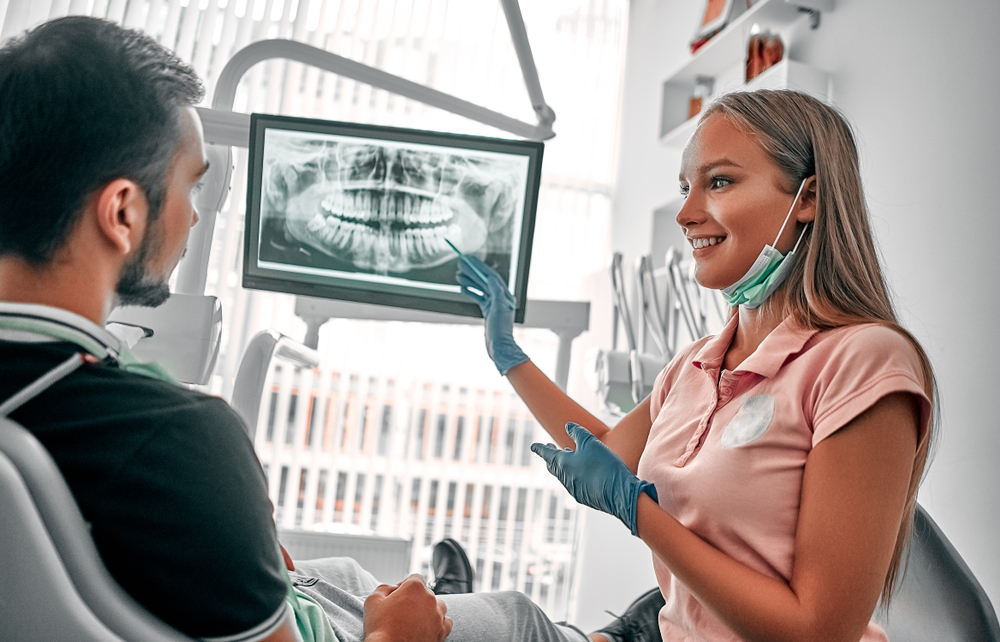
Furthermore, simply knowing that your dentist is using state-of-the-art technology to plan your procedure can provide immense peace of mind. We walk you through your 3D scans during your consultation, showing you exactly what we plan to do. Visualizing the process helps remove the fear of the unknown.
Long-Term Success Rates
The success of a dental implant relies heavily on its placement. If an implant is placed at a bad angle, the force of your bite will push unevenly against the bone, which can lead to implant failure years down the road.
By using virtual planning and surgical guides, we ensure the implant is positioned perfectly to distribute biting forces evenly. This microscopic attention to detail dramatically increases the lifespan of your implant, ensuring your new smile lasts for decades.
Taking the Next Step Toward Your New Smile
The journey to restoring your missing teeth is easier and more precise than ever before. We continually invest in the latest digital tools because we believe our patients deserve the absolute highest standard of care available.
If you want to read more about maintaining a healthy smile and the innovative techniques we use, explore our extensive library of dental blogs. We update our resources regularly to keep you informed and empowered about your oral health.
You do not have to live with the discomfort and embarrassment of missing teeth. We invite you to meet the team and see firsthand how our digital workflow prioritizes your comfort and safety.
If you are ready to find out how computer-guided technology can transform your smile, please contact us today to schedule your comprehensive implant consultation. We look forward to helping you achieve the confident, fully functional smile you deserve.
Top Rated Dentist in Burke VA
At Shield Dental Care, we take pride in being a top-rated Dentist in Burke, VA. We are dedicated to enhancing your charming smile. Our philosophy revolves around your smile being a beautiful reflection of your persona, a unique signature that merits the finest attention.
Tour Our Burke Dental Office
Experience the best of dental technology and service at Shield Dental Care. Situated conveniently at 6505 Sydenstricker Rd B, Burke, VA 22015,
Related Blogs
- What to Expect at Your Cosmetic Dentistry Consultation
- 5 Signs You Should See a Cosmetic Dentist
- How Much Does a Smile Makeover Cost? A Complete Guide
Digital technology has transformed dental implant placement from freehand estimation into a precisely planned procedure. CBCT scans build a 3D model of the jaw that reveals bone density, nerves, and sinuses, while intraoral scanners replace messy putty impressions. Merging this data lets the dentist simulate the entire surgery and 3D-print a custom guide that controls the drill's exact angle and depth. The result is safer, faster, often flapless surgery with less swelling and reliably crafted crowns.