
A loose dental implant should not be ignored, but it is not always an emergency. A loose crown or abutment screw is common and usually a simple fix. A loose implant post — the part bonded to your jawbone — signals a failing bond and needs immediate attention. Contact your dentist promptly rather than waiting to see whether it settles.
- Concerned About A Loose Dental Implant
- The First Crucial Step: Don’t Panic and Don’t Wait
- Loose Crown vs. Loose Implant: A Critical Distinction
- Why Does an Implant Post Become Loose
- Treatment for a Loose Dental Implant: A Step-by-Step Approach
A dental implant is designed to be a permanent, stable, and seamless part of your smile. Fused directly to your jawbone, a healthy implant should feel as solid and secure as the natural tooth it replaced. So, when you feel a slight wiggle, a subtle click, or any sensation of movement, it’s natural to feel a sense of alarm. A loose dental implant is not something to be ignored; it is a clear signal that something is wrong and requires immediate professional attention.
At Shield Dental Care, we understand that any issue with your dental implant can be concerning. That’s why we believe in providing clear, comprehensive information to help you understand what’s happening and what to do next. A loose implant is a serious issue, but it is not always a catastrophe. The cause of the looseness determines the solution, and in many cases, the problem can be resolved with a simple, straightforward procedure.
This guide will walk you through everything you need to know about a loose dental implant. We will explain the critical difference between a loose crown and a loose implant post, explore the potential causes, and outline the treatment options available. Our goal is to replace your anxiety with knowledge and a clear path forward to restoring the stability and function of your smile.
Concerned About A Loose Dental Implant?
Movement, pressure, clicking, or instability around a dental implant should be evaluated as soon as possible. In some cases, the issue is a loose crown or abutment. In others, it may indicate bone loss, infection, or implant failure. Prompt evaluation helps prevent additional complications and may improve the chances of saving the restoration.
Shield Dental Care provides dental implant evaluations for patients experiencing loose implant symptoms in Burke, VA and surrounding communities.
Call Shield Dental Care Now To Schedule An Emergency Implant Evaluation.
The First Crucial Step: Don’t Panic and Don’t Wait
If you detect any movement in your dental implant, the first two rules are simple:
- Avoid wiggling it. Resist the temptation to test the looseness with your tongue or finger. Applying extra force to a compromised implant can worsen the problem, potentially causing further damage to the surrounding bone or the implant components.
- Call your dentist immediately. A loose implant is a dental urgency. It is not a “wait and see” situation. The sooner the issue is diagnosed, the better the chances of a simple and successful resolution.
Prompt action can be the difference between tightening a screw and needing to remove the entire implant. When you call, be prepared to describe the sensation. Is it a minor shift when you chew? A noticeable wiggle when you touch it? This information will help the dental team prepare for your emergency appointment.
Loose Crown vs. Loose Implant: A Critical Distinction
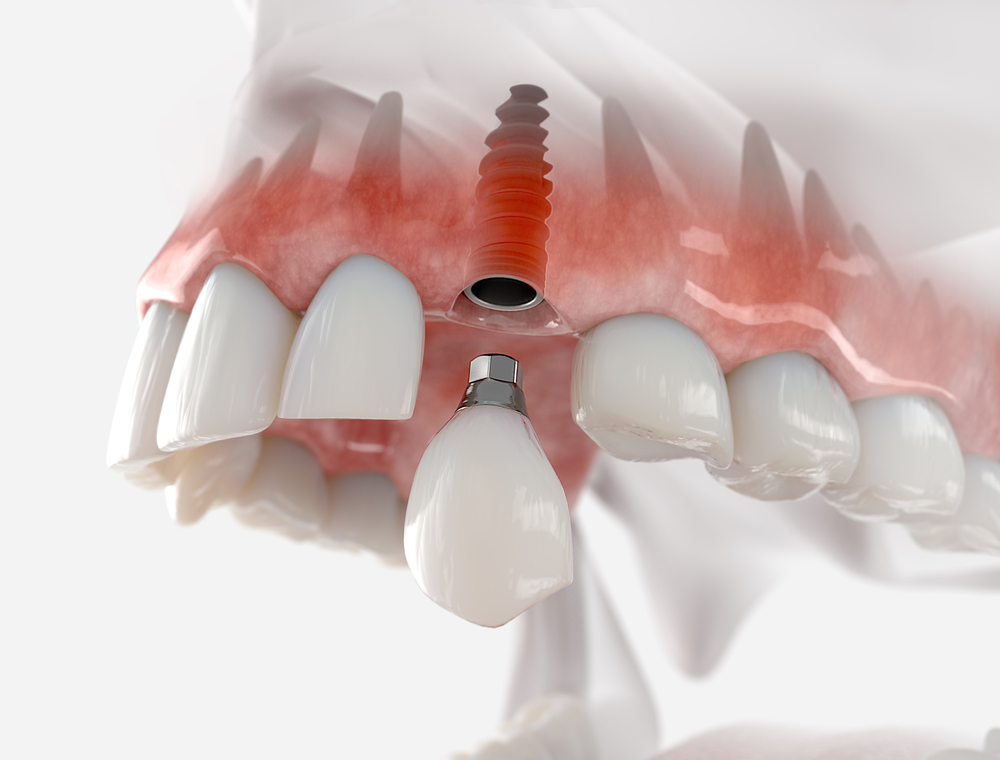
When a patient says their implant is loose, the first thing a dentist must determine is which part is actually moving. A dental implant is not a single piece; it’s a system composed of three main parts:
- The Implant Post (Fixture): This is the titanium, screw-like post that is surgically placed into the jawbone. It functions as the artificial tooth root.
- The Abutment: This is a connector piece that is attached to the top of the implant post. It sits at or just below the gum line and serves as the foundation for the final restoration.
- The Restoration (Crown): This is the visible, tooth-shaped porcelain cap that is attached to the abutment. It’s what you see when you smile and what you use to chew.
The looseness can originate from two different places: the connection between the crown and the implant, or the connection between the implant and the jawbone. The diagnosis and treatment for each are vastly different.
What It Means to Have a Loose Crown or Abutment
This is the most common and, thankfully, the most easily resolved cause of a “loose implant.” The movement is not coming from the implant post in the bone, but from the components attached to it.
The crown is typically secured to the abutment by either dental cement or a tiny screw (the abutment screw) that passes through the crown and into the abutment. It is this screw that is the most frequent culprit.
Causes of a Loose Crown:
- Screw Loosening: Over years of biting and chewing, the constant micro-vibrations can cause the abutment screw to gradually loosen. This is the most likely scenario. The feeling is often a slight ticking or shifting when you eat.
- Cement Failure: If your crown was cemented onto the abutment, the dental cement can degrade over time, causing the bond to weaken and the crown to become loose.
- Damaged Restoration: The crown itself could be fractured. A piece of the porcelain might have broken in a way that makes the whole crown feel unstable.
The Diagnosis and Treatment:
Diagnosing a loose crown is straightforward. Your dentist will take an X-ray to confirm that the implant post itself is still solidly integrated with the bone. They will then carefully examine the crown and test for mobility.
If a loose screw is the problem, the solution is beautifully simple. Your dentist will access the screw (often through a small, pre-existing hole in the crown that is covered with composite filling material), use a special driver to remove it, clean the components, and then re-tighten it to the correct torque specification. In some cases, they may use a new screw. The entire process is quick, painless, and restores function immediately.
If the cement has failed, the dentist will remove the crown, clean off the old cement from both the crown’s interior and the abutment, and then re-cement it securely.
A loose crown is a mechanical issue, not a biological one. It does not mean your implant has failed. However, it must be addressed quickly. A loose crown can allow bacteria to seep into the space around the abutment, potentially leading to inflammation. It also creates an uneven bite that can put damaging stress on the implant post.
What It Means to Have a Loose Implant Post
This is a much more serious situation. A loose implant post means that the fixture itself—the part embedded in your jaw—is moving. This indicates that the foundational bond between the implant and the bone has been compromised or lost. This process is called osseointegration failure.
A healthy, integrated implant has zero mobility. Any movement of the post itself is a definitive sign of implant failure.
The Diagnosis:
Your dentist will use a combination of methods to confirm a loose implant post:
- Tactile Test: They will gently apply pressure to the implant and feel for movement.
- X-ray Analysis: A dental X-ray is crucial. It will show a dark space or halo around the implant post, which is a clear visual indicator of bone loss and the absence of osseointegration. A healthy implant on an X-ray will show the bone in direct, intimate contact with the implant threads.
- Patient Sensation: The patient can often tell that the movement feels deeper and more profound than just a wobbly tooth on top.
Unfortunately, a loose implant post cannot be “tightened” or “reattached” to the bone. The biological connection has been lost, and the implant can no longer serve as a stable foundation.
Why Does an Implant Post Become Loose?
A loose implant post signifies late-stage implant failure, which can happen months or even years after the implant was successfully placed. The causes are primarily biological and are often the result of conditions that develop over time.
Peri-Implantitis: The Leading Cause
The number one reason for a late-stage implant failure is peri-implantitis. This is a destructive inflammatory disease, similar to periodontitis (gum disease) in natural teeth, that affects the tissues around an implant.
It begins with the buildup of bacterial plaque around the implant base. This leads to an initial, reversible stage called peri-implant mucositis (gum inflammation). If this is not treated, the infection progresses deeper, triggering an immune response that destroys the jawbone supporting the implant. As the bone erodes, the implant loses its anchor and starts to become mobile. The final stage of untreated peri-implantitis is a completely loose and failed implant. Key signs leading up to this point often include bleeding gums, swelling, and pus formation.
Excessive Force or Trauma
An implant can also become loose due to overwhelming physical forces that the bone cannot withstand.
- Chronic Teeth Grinding (Bruxism): The immense, repetitive forces of grinding or clenching your teeth, especially during sleep, can put a long-term strain on the implant and the surrounding bone. Over many years, this can lead to bone loss or even a fracture of the implant itself.
- Acute Trauma: A sudden, sharp blow to the face from a fall, sports injury, or accident can fracture the bone around the implant or the implant itself, causing it to become loose immediately.
- Poorly Fitting Prosthesis: A crown or bridge that doesn’t fit properly can create incorrect biting forces. This can overload certain parts of the implant, leading to mechanical stress and bone loss over time.
Insufficient Bone or Poor Bone Quality
Sometimes, late failure can be traced back to the initial conditions of the site. If the implant was placed in an area with borderline bone volume or in bone that was softer than ideal, it may have integrated successfully at first but may not be able to withstand long-term chewing forces. Over years of function, the bone can slowly break down under the load, eventually leading to looseness. This is why a thorough initial assessment of bone quality is so critical to long-term success.
Host Health Factors
Changes in a patient’s overall health can impact a previously stable implant. The development of uncontrolled diabetes, certain autoimmune disorders, or undergoing treatments like head and neck radiation can compromise the body’s ability to maintain bone health and fight infection, increasing the risk of peri-implantitis and implant failure.
Treatment for a Loose Dental Implant: A Step-by-Step Approach
When you come to Shield Dental Care with a loose implant, our first priority is to diagnose the problem accurately and present you with clear treatment options. Our experienced team of professionals will ensure you are comfortable and informed throughout the process.
Step 1: The Emergency Examination and Diagnosis
Your appointment will begin with a gentle but thorough examination. We will:
- Listen to your description of the problem.
- Visually inspect the implant and surrounding gums.
- Take a high-resolution dental X-ray to assess the bone level around the implant post and check the fit of the components.
- Carefully test for mobility to determine if it’s the crown or the implant post that is loose.
Step 2: Treatment for a Loose Crown
If our diagnosis confirms that only the crown or abutment is loose, you can breathe a sigh of relief. The treatment is typically quick and straightforward.
- If the screw is loose: We will access the screw, remove the crown, clean all components thoroughly, replace the screw if necessary, and re-torque it to the manufacturer’s specifications. Your bite will be checked to ensure everything is comfortable.
- If the cement has failed: The crown will be removed, all old cement will be cleaned off, and the crown will be re-cemented with fresh, durable dental cement.
In either case, you will likely leave the office on the same day with a stable, fully functional implant. We consider this a type of dental restoration that brings your implant system back to its original state.
Step 3: Treatment for a Loose Implant Post
If the diagnosis reveals that the implant post itself is mobile, the treatment plan is more involved. A loose implant must be removed. There is no way to save it once osseointegration has failed.
- Implant Removal: The procedure for removing a failed implant is usually quite simple. Since the implant is already loose, it can often be “unscrewed” from the jaw with minimal effort. We ensure the area is completely numb, so the procedure is comfortable. For patients with high anxiety, we offer sedation dentistry options to ensure a stress-free experience.
- Site Debridement and Grafting: After the implant is removed, the socket must be thoroughly cleaned out. All infected and inflammatory tissue must be removed—a process called debridement. In almost all cases, the bone defect left by the infection and the removal will need to be repaired with a bone graft. This procedure rebuilds the lost bone and creates a healthy foundation for a potential future implant.
- Healing Period: The site is then allowed to heal for several months (typically 4-6 months). During this time, the bone graft matures and integrates with your jaw, restoring the bone volume and density.
- Replacement Options: Once healing is complete, we can reassess the site. If the bone has regenerated successfully, you will likely be a candidate for a new dental implant. Alternatively, other options like a traditional dental bridge can be considered.
While the news that an implant needs to be removed can be disheartening, it’s important to view it as a necessary step to eliminate infection, restore health to your jaw, and pave the way for a new, successful solution.
Prevention: The Key to Avoiding a Loose Implant
The best way to deal with a loose implant is to prevent it from ever happening. The long-term stability of your implant dentistry investment is a partnership between you and your dental team.
- Impeccable Oral Hygiene: This is the single most important factor. You must clean around your implant every single day with brushing and, crucially, with tools like water flossers or interdental brushes to remove plaque from the gum line.
- Regular Professional Maintenance: Never skip your routine check-ups and cleanings. For implant patients, we often recommend appointments every 3-6 months. During these visits, we can detect the earliest signs of trouble, like inflammation or a slightly loose screw, and intervene before a major problem develops. Our Shield Prevention Plan is an excellent way to ensure you get this vital care affordably.
- Wear a Nightguard for Bruxism: If you grind your teeth, a custom nightguard is non-negotiable. It protects your implant from the destructive forces that can lead to component loosening or bone loss.
- Report Problems Immediately: If you notice bleeding, soreness, or any change around your implant, don’t wait. Early detection of peri-implant mucositis can prevent it from progressing to bone loss.
You can find more helpful articles on maintaining your oral health on our blogs page.
About Loose Dental Implants
Your Partner in Implant Health
Feeling a loose dental implant can be a stressful experience, but you are not alone. The expert team at Shield Dental Care is here to provide swift, compassionate, and effective care. We have the technology and expertise to accurately diagnose the cause of the problem and provide the right solution, whether it’s a simple tightening or a comprehensive plan to replace a failed implant.
Your oral health is our top priority. Patients experiencing implant complications often benefit from a full evaluation of dental implants in Burke, VA to identify underlying bone loss, infection, or restoration problems before they worsen. If you are experiencing implant movement, discomfort, or concerns about implant stability, contact Shield Dental Care to schedule an evaluation. Let us help you restore the peace of mind and stable smile you deserve.
Top Rated Dentist in Burke VA
At Shield Dental Care, we take pride in being a top-rated Dentist in Burke, VA. We are dedicated to enhancing your charming smile. Our philosophy revolves around your smile being a beautiful reflection of your persona, a unique signature that merits the finest attention.
Tour Our Burke Dental Office
Experience the best of dental technology and service at Shield Dental Care. Situated conveniently at 6505 Sydenstricker Rd B, Burke, VA 22015,
Related Blogs
- What to Expect at Your Cosmetic Dentistry Consultation
- 5 Signs You Should See a Cosmetic Dentist
- How Much Does a Smile Makeover Cost? A Complete Guide
Frequently Asked Questions
Can a loose dental implant be saved?+
Sometimes. If the movement is caused by a loose crown or abutment screw, the implant may be repaired quickly without removing the implant post itself. If the implant post has lost bone support, removal and replacement may be necessary.
Is a loose dental implant considered an emergency?+
A loose dental implant should be evaluated as soon as possible. Delaying treatment may increase bone loss, worsen infection, or reduce the chances of saving the restoration.
What causes a dental implant to become loose years later?+
Late implant loosening is often caused by peri-implantitis, bone loss, excessive grinding forces, infection, trauma, or long-term stress on the implant components. Regular maintenance visits help identify problems early.
What are signs of dental implant failure?+
Common signs of implant failure may include movement, pain while chewing, gum swelling, bleeding around the implant, pus drainage, bad taste, or progressive discomfort near the implant site.
Can a loose implant crown be tightened?+
Yes. In many cases, the crown or abutment screw can simply be re-tightened or replaced if the implant post itself remains stable within the jawbone.
Is it normal for a dental implant to move slightly?+
No. A healthy, fully integrated implant should not move at all — not even slightly. Movement you can feel with your tongue or when you bite means something has come loose: most often the crown or the abutment screw, and less often the implant post itself. It is worth having checked promptly even when there is no pain, because the cause is usually far easier to fix early.
What does a loose abutment screw feel like, and how is it fixed?+
A loose abutment screw usually shows up as a crown that rocks, clicks or rotates slightly while the implant itself stays firmly in place. It is the most common and most straightforward cause of a loose implant. Your dentist accesses or removes the crown, cleans the components, replaces the screw if it is worn, and retightens it to the manufacturer's torque specification. A screw that keeps loosening can point to a bite problem or a worn part, which is why repeat loosening should be assessed rather than simply retightened again.
My implant felt loose within weeks of surgery — what does that mean?+
Timing changes what it usually means. Looseness in the first weeks or months after placement, before the final crown is fitted, can indicate the implant has not integrated with the bone, and that needs to be evaluated quickly. Looseness that appears after the crown has been in place and working for a while is far more likely to be the crown or the screw than the implant. In both cases, call your dentist rather than testing it by wiggling it, which can make the problem worse.
Any movement in a dental implant deserves prompt attention, though it is not always an emergency. The key is identifying what is actually loose. A loose crown or abutment screw is common and usually a simple repair, while a loose implant post signals a failing bond with the bone and is far more serious. Avoid wiggling the implant, and call your dentist promptly rather than waiting to see whether it settles.