
- Understanding the True Value of Dental Implants
- The Unmatched Benefits of Dental Implants
- Potential Risks and Complications
- Long-Term Results: Implants vs. Dentures and Bridges
- Are Dental Implants Right for You
Missing a tooth affects much more than just your appearance. It impacts how you eat, how you speak, and how you feel about yourself every single day. When you start exploring solutions for replacing missing teeth, you quickly realize you have several choices. Dentures, bridges, and implants all offer different ways to fill the gap.
However, one option consistently stands out for its permanence and natural feel. You have likely heard that implants are the gold standard of dental restoration. But with higher upfront costs and a surgical procedure involved, you might find yourself asking a very important question: are dental implants actually worth it?
This comprehensive guide will help you answer that exact question. We will perform a deep dive into the true cost-benefit analysis of choosing implants. By exploring the unique advantages, addressing the potential risks, and comparing the long-term results against traditional methods, you will gain the clarity you need to make an informed decision about your oral health.
Understanding the True Value of Dental Implants
When evaluating any major health decision, looking solely at the initial price tag rarely gives you the full picture. You must consider the long-term value and how the treatment impacts your daily quality of life. Dental implants require a larger initial investment of time and money compared to traditional alternatives.
This higher initial cost stems from the high-quality materials used, such as biocompatible titanium, and the specialized surgical expertise required to place them accurately. The process also involves multiple stages, from the initial consultation and 3D imaging to the surgical placement and the final custom crown.
However, viewing this simply as an expense ignores the lifelong dividends it pays. Unlike temporary fixes that require ongoing maintenance, replacements, and specialized cleaning supplies, an implant becomes a permanent part of your body. When you break down the numbers over a lifespan of twenty or thirty years, the cost-benefit ratio shifts dramatically in favor of implants.
The Cost-Benefit Breakdown
Think about a traditional dental bridge. While it costs less upfront, a bridge typically needs replacement every ten to fifteen years. Each replacement incurs new costs. Over a few decades, you might pay for three separate bridges.
Now consider dentures. They require regular realignments as your jawbone inevitably shrinks over time. You must also regularly purchase special adhesives and cleaning solutions.
A dental implant bypasses these recurring costs. Once the titanium post integrates with your jawbone, it rarely needs replacement. While the porcelain crown on top might eventually need an update due to normal wear and tear, the foundation remains solid. This makes implants a one-time investment in your health, function, and confidence.
The Unmatched Benefits of Dental Implants
To truly understand why millions of people choose implants every year, we need to look at what happens beneath the surface. Implants offer biological and aesthetic benefits that simply cannot be matched by appliances that rest on top of the gums.
Complete Jawbone Preservation
Your jawbone needs constant stimulation to stay healthy and strong. Every time you chew, the roots of your natural teeth send signals to your jawbone, telling your body to send nutrients to that area. When you lose a tooth, that vital stimulation stops completely.
Without this stimulation, the body assumes the bone is no longer needed. The bone begins to resorb, or melt away. This leads to a sunken facial appearance, premature aging, and shifting of your remaining teeth. Dentures and bridges do absolutely nothing to stop this bone loss.
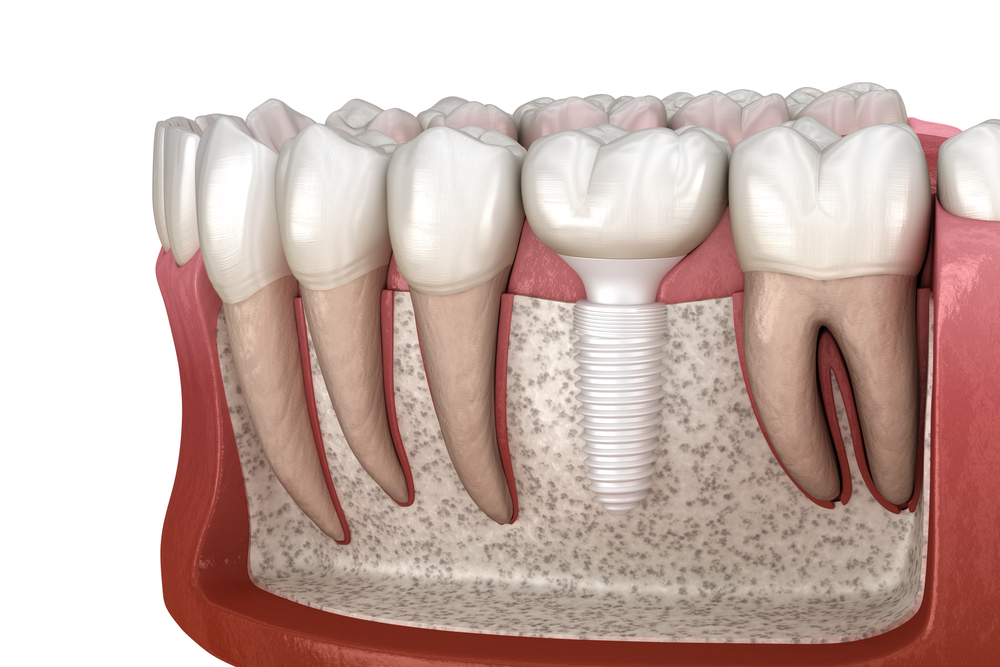
Dental implants are the only restoration method that actively prevents bone deterioration. Because the titanium post acts exactly like a natural tooth root, it restores the chewing stimulation your jawbone requires. This preserves your natural facial structure and keeps your jaw healthy for years to come.
Natural Aesthetics and Function
Nothing else looks, feels, or acts quite like a real tooth. But an implant comes incredibly close. The crown placed on top of your implant is custom-designed to match the exact shade, shape, and translucency of your natural teeth. You can look at our gallery of smiles to see just how seamlessly these restorations blend in.
Beyond looks, implants restore your full chewing power. Traditional dentures often slip and slide, making it difficult or impossible to eat crunchy fruits, tough meats, or sticky foods. Implants stay firmly locked in place. You can bite into an apple or enjoy a steak dinner without a second thought.
You also care for an implant exactly as you do your natural teeth. There is no need to remove it at night or soak it in a glass. You simply brush twice a day, floss regularly, and maintain your routine dental checkups.
Protecting Adjacent Teeth
Traditional bridges require a significant sacrifice to your surrounding natural teeth. To secure a bridge, the dentist must file down the healthy teeth on either side of the gap to create room for the supporting crowns. This permanently alters those healthy teeth, making them more vulnerable to decay and damage in the future.
Implants are entirely self-supporting. They stand alone in the jawbone and do not rely on adjacent teeth for stability. This conservative approach leaves your healthy teeth completely untouched, promoting better overall oral health in the long run.
Potential Risks and Complications
No medical or dental procedure is entirely without risk. We believe in complete transparency, which means discussing the potential complications associated with implant surgery. While the success rate for dental implants is exceptionally high — a multicentre cohort study reported 97.4% survival at two years—it helps to know what to watch out for.
Risk of Infection
Any time you make an incision in the tissue, infection becomes a possibility. Peri-implantitis is a specific type of infection that can occur around a dental implant. It causes inflammation in the gums and bone surrounding the titanium post.
If left untreated, peri-implantitis can lead to bone loss and eventually cause the implant to fail. The best way to prevent this is through meticulous oral hygiene and strictly following your dentist’s post-operative care instructions. Smokers face a significantly higher risk of developing infections and are often advised to quit before undergoing implant surgery.
Implant Failure and Rejection
While rare, a condition known as failed osseointegration can occur. This means the jawbone fails to fuse properly with the titanium post. This usually happens within the first few months after surgery.
Factors that increase the risk of implant failure include inadequate bone density, uncontrolled diabetes, and severe teeth grinding. To minimize this risk, we perform rigorous evaluations before approving anyone for surgery. We ensure you have enough healthy bone volume and address any underlying health conditions beforehand.
Nerve Damage or Sinus Issues
During the planning phase, precise placement is crucial. If an implant is placed incorrectly in the lower jaw, it can potentially compress or damage a nerve, leading to numbness or tingling in the lips, chin, or tongue. Similarly, implants placed in the upper jaw can sometimes protrude into the sinus cavities.
This underscores the importance of choosing a highly skilled and experienced team. When you meet the team at our Burke office, you will find experts who utilize advanced 3D imaging and computer-guided surgery. These advanced technologies allow us to map the exact location of your nerves and sinuses, virtually eliminating the risk of these specific complications.
Long-Term Results: Implants vs. Dentures and Bridges
When weighing your options, the timeline of success matters immensely. How will your smile look and function five, ten, or twenty years from now? Let us compare the long-term realities of the three main restoration choices.
The Lifespan of Dentures and Bridges
Dentures offer a fast and relatively inexpensive way to replace a full arch of teeth. However, because they do not stop bone loss, the shape of your gums changes constantly. A denture that fits perfectly today will likely become loose and uncomfortable within a few years. You will face regular visits for realignments and eventually require a completely new set.
Bridges offer more stability than removable dentures because they are cemented in place. But they have a limited lifespan. The cement can wash out over time, allowing bacteria to decay the supporting teeth underneath. On average, a bridge will serve you well for about a decade before needing replacement.
The Lifetime Investment of Implants
Dental implants change the narrative completely. With proper care, the titanium implant post can last for decades.
The crown attached to the implant withstands immense biting forces every day. Like natural teeth, crowns can chip or wear down eventually. Most patients find their implant crowns last 15 to 20 years before needing a simple replacement. But the foundation—the implant itself—remains securely anchored in your jawbone. For deeper insights into maintaining your restorations over time, you can always explore our educational blogs.
Are Dental Implants Right for You?
Determining if you are a candidate for implants involves a personalized assessment. Generally, you need healthy gums and adequate bone density to support the post. You must also be committed to good oral hygiene.
Age is rarely a limiting factor for implants. Whether you lost a tooth to a sports injury in your twenties or have been dealing with ill-fitting dentures in your seventies, implants can drastically improve your quality of life. Even if you have suffered bone loss, procedures like bone grafting can rebuild your jaw and make implants possible.
The only way to know for sure is to sit down with a professional. We will review your medical history, take detailed scans, and have an honest conversation about your specific goals and expectations.
Making Implants Accessible in Burke
We understand that cost is a significant factor when considering dental implants. Many patients worry that because implants are an advanced procedure, they will be entirely out of reach. We firmly believe that everyone in Burke deserves a strong, healthy, and complete smile.
Lack of traditional dental insurance should never stand between you and the best possible care. That is why we offer the Shield Prevention Plan. This in-house membership option provides substantial discounts on restorative treatments, including implants, making this life-changing procedure much more manageable for your budget. We work with you to find a financial solution that makes sense.
Ready to Reclaim Your Smile?
So, are dental implants worth it? When you factor in the preservation of your jawbone, the protection of your natural teeth, the elimination of recurring replacement costs, and the incredible boost to your daily confidence, the answer for most patients is a resounding yes. They represent an investment in yourself that pays off every single time you eat, speak, and smile.
You do not have to settle for missing teeth or uncomfortable dentures. If you are ready to explore the permanent solution that dental implants offer, we are here to guide you through every step of the journey. Take control of your oral health today. Reach out to our team by visiting our contact us page to schedule your comprehensive consultation in Burke. Let us help you rebuild a smile that will last a lifetime.
Top Rated Dentist in Burke VA
At Shield Dental Care, we take pride in being a top-rated Dentist in Burke, VA. We are dedicated to enhancing your charming smile. Our philosophy revolves around your smile being a beautiful reflection of your persona, a unique signature that merits the finest attention.
Tour Our Burke Dental Office
Experience the best of dental technology and service at Shield Dental Care. Situated conveniently at 6505 Sydenstricker Rd B, Burke, VA 22015,
Related Blogs
- What to Expect at Your Cosmetic Dentistry Consultation
- 5 Signs You Should See a Cosmetic Dentist
- How Much Does a Smile Makeover Cost? A Complete Guide
For most patients, dental implants justify their higher upfront cost and surgical process over time. Unlike dentures and bridges, they preserve the jawbone by restoring chewing stimulation, protect adjacent healthy teeth, and function and look like natural teeth. The titanium post can last a lifetime with proper care. Risks such as infection, failed integration, or nerve issues are uncommon and minimized through careful evaluation and advanced imaging.