
- The Lifespan of Traditional Dentures
- The Lifespan of Dental Bridges
- The Lifespan of Dental Implants: A Lifelong Solution
- A Head-to-Head Comparison: Implants vs. Bridges vs. Dentures
- Factors That Influence the Lifespan of Your Dental Implant
Losing a natural tooth forces you to make an important decision about your oral health. You need to fill the gap to restore your chewing ability, protect your remaining teeth, and regain your confidence. When you start researching your options, you will quickly encounter three main choices: dentures, dental bridges, and dental implants.
While all three options successfully replace missing teeth, they do not offer the same level of longevity. If you want to make the best investment for your smile, you must look beyond the initial procedure. You need to understand how each option holds up over five, ten, or even thirty years.
How often will you need to replace a dental bridge? Will dentures eventually stop fitting? Why do dental professionals frequently refer to implants as a permanent solution?
This comprehensive guide answers all of those questions. We will compare the expected lifespans, durability, and daily maintenance requirements of dentures, bridges, and dental implants. By understanding the science behind these treatments, you can make an informed, confident decision about your dental restoration.
The Lifespan of Traditional Dentures
For generations, removable dentures served as the primary solution for extensive tooth loss. They consist of artificial teeth attached to a pink, gum-colored acrylic base. While they provide an immediate functional and aesthetic fix, they represent the shortest-term solution among modern dental restorations.
How Long Do Dentures Last?
On average, a set of traditional dentures lasts between five and ten years. Even with meticulous care, you will likely need to replace them several times throughout your life. They require regular maintenance, adjustments, and eventual replacement to keep functioning properly.
Why Dentures Require Frequent Replacement
The primary reason dentures fail over time has nothing to do with the appliance itself. It has everything to do with your jawbone.
When you lose your natural teeth, your jawbone no longer receives the stimulation it needs from chewing. Without this stimulation, your body naturally begins to resorb, or dissolve, the bone tissue. This causes your jawbone to shrink and change shape over time.
Because traditional dentures rest directly on top of your gums, they rely entirely on the shape of your jawbone for support and suction. As your bone melts away, the dentures lose their precise fit. They begin to slip, slide, and click when you speak or eat. Dentists can perform a “reline” to adjust the fit temporarily, but eventually, the changes in your mouth become too severe. At that point, you must purchase a completely new set of dentures.
Maintenance and Daily Care for Dentures
Dentures demand a rigorous daily cleaning routine. You must remove them every night to give your gums a chance to rest and recover. While they are out of your mouth, you must soak them in a specialized cleaning solution to keep them moist and prevent them from losing their shape.
You also need to brush them carefully with a soft-bristled brush to remove food particles and plaque. Furthermore, as the fit changes over time, many patients find themselves relying heavily on messy dental adhesives to keep their teeth securely in place throughout the day.
The Lifespan of Dental Bridges
A dental bridge offers a fixed, non-removable solution for replacing one or more missing teeth in a row. A bridge consists of an artificial tooth (the pontic) held in place by dental crowns attached to the healthy teeth on either side of the gap.
How Long Do Dental Bridges Last?
A dental bridge generally lasts between ten and fifteen years. With exceptional oral hygiene and regular dental checkups, some bridges can last up to twenty years. However, they are not considered a lifelong solution.
If you are considering this treatment, you can learn more about getting a dental crown or dental bridge in Burke to see if it aligns with your specific needs.
Why Dental Bridges Eventually Fail
Unlike dentures, a bridge stays firmly cemented in place. However, it still faces several long-term challenges.
First, the bridge relies entirely on the strength of your adjacent natural teeth. To place the supporting crowns, your dentist must permanently alter and file down these healthy teeth. Over time, the immense pressure of chewing can place undue stress on these supporting teeth, potentially leading to fractures or structural damage.
Second, the cement holding the bridge in place can slowly wash away or degrade over the years. This creates microscopic gaps between the crown and the natural tooth underneath. Bacteria can easily slip into these gaps, causing severe tooth decay. Because the crown covers the natural tooth, this decay often goes unnoticed until it causes significant pain or structural failure. If the supporting teeth fail, the entire bridge fails.
Maintenance and Daily Care for Bridges
Maintaining a dental bridge requires more effort than caring for natural teeth. Because the artificial tooth sits closely against your gum line, food particles and plaque easily become trapped underneath it.
You cannot floss between the teeth of a bridge normally. Instead, you must use special flossing threaders or interdental brushes to clean underneath the artificial tooth. Failing to keep this area completely clean drastically increases your risk of developing gum disease and decay in the supporting teeth, which directly shortens the lifespan of your restoration.
The Lifespan of Dental Implants: A Lifelong Solution
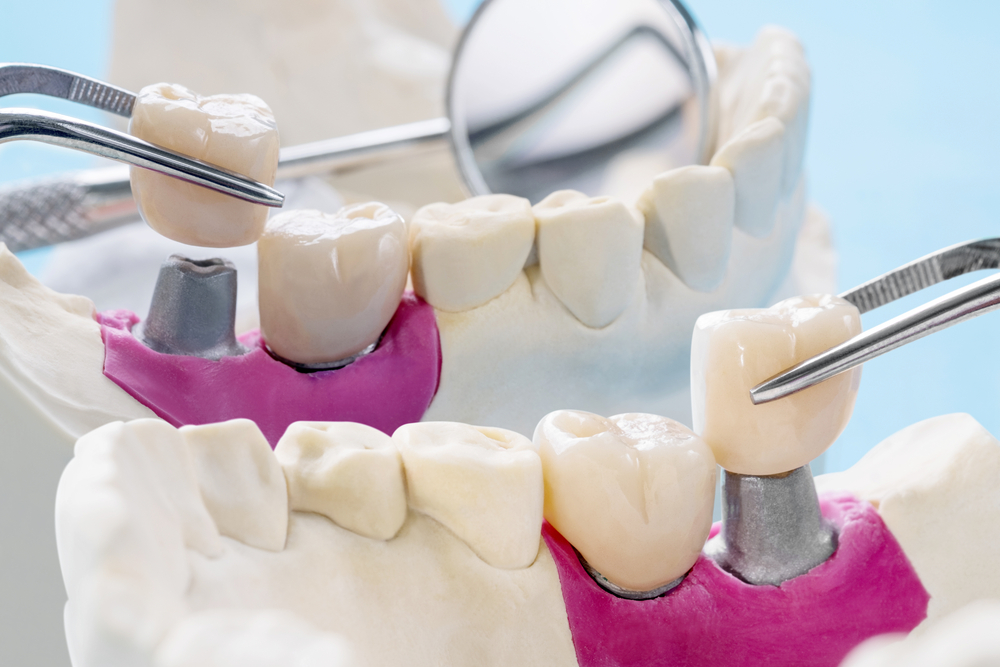
Dental implants revolutionized the field of restorative dentistry. Instead of resting on your gums or relying on neighboring teeth, an implant integrates directly into your jawbone. This unique approach mimics the structure of a natural tooth flawlessly.
How Long Do Dental Implants Last?
When people ask how long dental implants last, the answer comes in two parts.
The implant post itself—the small titanium screw placed into your jawbone—can easily last for the rest of your life. A multicentre cohort study reported 97.4% survival at two years for implant posts. Once the post successfully fuses with your bone, it becomes a permanent part of your anatomy.
The dental crown attached to the top of the implant acts just like a natural tooth. It handles the daily wear and tear of biting and chewing. Depending on your oral habits and diet, the crown typically lasts between fifteen and twenty years before you might need to replace it. However, replacing the crown is a simple, non-surgical procedure. The foundation—the implant post—remains securely in place forever.
The Power of Osseointegration
The secret behind the lifelong durability of implant dentistry is a remarkable biological process known as osseointegration.
Implants consist of biocompatible titanium. Your body recognizes this material and accepts it. After your dentist places the implant post into your jawbone, your living bone cells begin to grow around and attach themselves directly to the surface of the titanium.
This fusion process takes a few months to complete. Once finished, the implant locks firmly into your jawbone. It will never slip, shift, or fall out.
More importantly, the titanium post acts as an artificial tooth root. Every time you chew, the post sends vital stimulation down into your jawbone. This stimulation completely halts the bone resorption process that causes dentures to fail. Your jawbone remains healthy, dense, and strong, providing a secure foundation for your new tooth for decades to come.
Maintenance and Daily Care for Implants
Perhaps the greatest advantage of a dental implant is how easily it fits into your daily routine. You care for an implant exactly the same way you care for your natural teeth.
You do not need special adhesives, soaking solutions, or complicated flossing threaders. You simply brush your teeth twice a day, floss normally, and attend your routine dental cleanings. Because the implant post is made of titanium and the crown consists of porcelain, your new tooth can never develop a cavity. However, you must still maintain healthy gums to keep the implant secure.
A Head-to-Head Comparison: Implants vs. Bridges vs. Dentures
To help you make the best decision for your smile, let us compare these three options directly across several key categories.
Durability and Bite Force
When you wear traditional dentures, you lose a significant amount of your natural bite force. Dentures simply cannot withstand the pressure required to chew tough meats, crunchy apples, or sticky foods. They tend to dislodge or cause painful sores on your gums if you apply too much pressure.
A dental bridge restores a large portion of your bite force, allowing you to eat a relatively normal diet. However, you still need to exercise caution with overly hard or sticky foods to avoid damaging the bridge or the supporting teeth.
A dental implant restores much more of your natural bite force than a removable appliance. Because the implant anchors directly into your jawbone, it offers unmatched stability. You can confidently eat any food you desire without worrying about your tooth shifting, cracking, or causing you pain.
Impact on Jawbone Health
As mentioned earlier, jawbone health plays a critical role in your overall facial structure.
Dentures accelerate bone loss. The pressure of the hard acrylic resting on your gums can actually speed up the rate at which your jawbone deteriorates. This leads to a sunken, prematurely aged appearance in your lower face.
A dental bridge prevents your remaining teeth from shifting into the empty space, which offers some structural benefit. However, the bridge does nothing to stimulate the bone directly underneath the missing tooth. Over time, the bone in that specific area will still shrink.
Dental implants stand entirely alone as the only restorative treatment that actively preserves your jawbone. By mimicking a natural root, the implant keeps your bone stimulated, healthy, and completely intact.
Long-Term Financial Value
When comparing costs, many patients initially hesitate at the price of dental implants. Implants require a larger upfront investment than a bridge or a set of dentures.
However, you must look at the long-term financial picture. If you choose dentures, you will pay for a new set every five to ten years. You will also continually purchase adhesives and special cleaning supplies.
If you choose a bridge, you will likely pay to replace the entire unit every ten to fifteen years. Furthermore, if the teeth supporting the bridge develop severe decay, you might face additional costs for root canals or extractions.
Because an implant post lasts a lifetime, it represents a one-time investment in your oral health. You eliminate the recurring costs of replacements and specialized maintenance. Over a twenty- or thirty-year period, dental implants often prove to be the most cost-effective solution available.
Factors That Influence the Lifespan of Your Dental Implant
While dental implants boast an incredible success rate, their longevity depends heavily on how well you care for them. Several factors influence how long your implant will last.
Oral Hygiene Habits
Although an implant cannot get a cavity, the surrounding gum tissue remains vulnerable to infection. Peri-implantitis is a form of gum disease that occurs around a dental implant. If you allow plaque and bacteria to build up along your gum line, the infection can attack the bone supporting your implant. If the bone deteriorates, the implant can become loose and eventually fail. Brushing, flossing, and visiting your dentist regularly represent your best defense against peri-implantitis.
Lifestyle Choices
Smoking drastically reduces the lifespan of a dental implant. Nicotine restricts blood flow to your gums, which impairs your body’s ability to heal and fight off infection. Smokers face a significantly higher risk of implant failure, especially during the crucial osseointegration phase. Quitting smoking before and after your procedure greatly improves your chances of long-term success.
Medical Conditions
Certain medical conditions, such as uncontrolled diabetes or osteoporosis, can affect your body’s ability to heal and maintain bone density. If you suffer from a condition that compromises your immune system or bone health, you must manage it closely with your physician to ensure your implant remains secure.
Teeth grinding, also known as bruxism, can also place excessive force on your implant crown. If you grind your teeth at night, your dentist might recommend wearing a custom nightguard to protect your implant from unnecessary wear and tear.
Making the Right Choice for Your Smile
Choosing how to replace your missing teeth is a deeply personal decision. It depends on your specific oral health, your budget, and your long-term goals.
If you want a fast, affordable way to replace a full arch of teeth, dentures might seem appealing. If you want to avoid surgery and replace a single tooth quickly, a bridge offers a reliable middle ground.
However, if you want a permanent, worry-free solution that looks, feels, and functions exactly like a natural tooth, dental implants stand completely unmatched. They preserve your jawbone, protect your natural teeth, and give you the confidence to eat, speak, and smile without hesitation. You can read more about patient experiences and detailed care guides by visiting our educational blogs.
We believe that everyone deserves access to high-quality, long-lasting restorative care. If you do not have traditional dental insurance, you do not have to settle for a short-term fix. We proudly offer the Shield Prevention Plan, an in-house membership option designed to make advanced treatments like implants more accessible and affordable for our patients.
Your smile is an investment that pays dividends every single day. By choosing a solution designed to last a lifetime, you take a proactive step toward better oral health, improved confidence, and a brighter future.
Top Rated Dentist in Burke VA
At Shield Dental Care, we take pride in being a top-rated Dentist in Burke, VA. We are dedicated to enhancing your charming smile. Our philosophy revolves around your smile being a beautiful reflection of your persona, a unique signature that merits the finest attention.
Tour Our Burke Dental Office
Experience the best of dental technology and service at Shield Dental Care. Situated conveniently at 6505 Sydenstricker Rd B, Burke, VA 22015,
Related Blogs
- What to Expect at Your Cosmetic Dentistry Consultation
- 5 Signs You Should See a Cosmetic Dentist
- How Much Does a Smile Makeover Cost? A Complete Guide
Among tooth-replacement options, longevity differs sharply. Traditional dentures last about five to ten years and accelerate bone loss, while bridges last roughly ten to fifteen years but stress the filed-down teeth that support them. Dental implants stand apart: the titanium post can last a lifetime through osseointegration, with only the crown needing replacement around fifteen to twenty years. Implants also preserve jawbone and, despite higher upfront cost, often prove most cost-effective long term.