
- What is a Single-Tooth Dental Implant
- What is a Traditional Dental Bridge
- The Procedure: A Step-by-Step Comparison
- Impact on Jawbone and Oral Health
- Longevity, Durability, and Maintenance
Losing a single tooth can be a significant event. It affects not only the appearance of your smile but also your ability to chew and speak comfortably. Beyond these immediate concerns, a missing tooth can lead to long-term oral health complications, such as shifting teeth and bone loss in the jaw. Fortunately, modern dentistry offers excellent solutions to replace a missing tooth and restore your smile’s function and aesthetics. The two most common and effective options are a single-tooth dental implant and a traditional dental bridge.
Making the right choice between these two treatments is a crucial decision that depends on various factors, including your specific oral health condition, long-term goals, and budget. Both options can successfully fill the gap left by a missing tooth, but they do so in fundamentally different ways. Understanding these differences is the first step toward making an informed decision that you will be happy with for years to come.
This comprehensive guide will explore the details of single-tooth implants and dental bridges. We will compare the procedures, examine their impact on your oral health, discuss longevity and maintenance, and break down the associated costs. Our goal at Shield Dental Care is to provide you with the clear, detailed information you need to confidently discuss your options with our team and choose the best path forward for your smile.
What is a Single-Tooth Dental Implant?
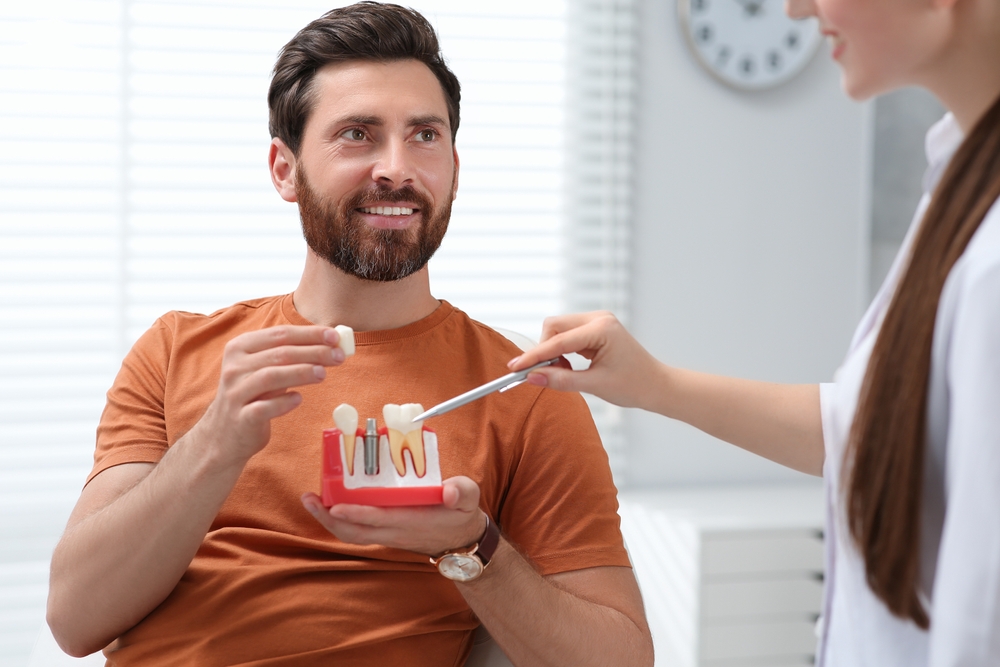
A single-tooth dental implant is widely considered the gold standard for replacing a missing tooth. It is a standalone solution that replicates the entire structure of a natural tooth, from root to crown. This advanced treatment involves surgically placing a small, screw-like post made of biocompatible titanium into the jawbone where the original tooth root was located.
The Components of a Dental Implant
A complete dental implant restoration consists of three parts:
- The Implant Post: This is the titanium screw that is surgically placed into the jawbone. Over a period of several months, a process called osseointegration occurs, where the bone grows around and fuses with the implant. This creates an incredibly strong and stable foundation, essentially becoming an artificial tooth root.
- The Abutment: Once osseointegration is complete, a small connector piece called an abutment is attached to the top of the implant post. The abutment protrudes just above the gum line and serves as the attachment point for the final restoration.
- The Crown: The final piece is a custom-made dental crown. This is the visible “tooth” part of the restoration. It is meticulously designed to match the color, shape, and size of your surrounding natural teeth, ensuring a seamless and natural-looking result. The crown is securely attached to the abutment, completing the restoration.
The primary advantage of implant dentistry is that it functions independently without relying on adjacent teeth for support. This makes it a conservative and health-focused approach to tooth replacement.
What is a Traditional Dental Bridge?
A traditional dental bridge is a long-standing and reliable method for replacing one or more missing teeth in a row. As the name suggests, a bridge “bridges the gap” created by the missing tooth. Unlike an implant, a bridge is not a standalone structure. It relies on the neighboring teeth for support.
The Structure of a Dental Bridge
A traditional fixed bridge is composed of two main parts:
- The Abutment Teeth: These are the natural teeth on either side of the gap. To support the bridge, these teeth must be prepared by having a portion of their enamel removed. This reshaping allows for dental crowns to be placed over them.
- The Pontic: This is the artificial tooth (or teeth) that fills the empty space. The pontic is fused between the two crowns that will cover the abutment teeth.
The entire structure—the two crowns and the pontic in between—is fabricated as a single piece. During the placement procedure, this unit is cemented onto the prepared abutment teeth, effectively closing the gap and restoring the appearance and function of the smile. While effective, this approach requires the alteration of otherwise healthy teeth, which is a significant consideration for many patients. At Shield Dental Care, we provide expert care for dental bridges in Burke, VA to help patients restore function, appearance, and long-term oral health.
The Procedure: A Step-by-Step Comparison
The process for getting a dental implant versus a dental bridge is quite different, both in terms of timeline and the steps involved.
The Dental Implant Procedure
The implant process is a multi-stage surgical procedure that typically spans several months.
- Initial Consultation and Planning: The journey begins with a comprehensive examination, including digital X-rays or 3D CT scans. This allows us to assess the health and density of your jawbone to ensure you are a suitable candidate for an implant. We will develop a precise treatment plan tailored to your needs.
- Implant Placement Surgery: This is a minor surgical procedure performed under local anesthesia. A small incision is made in the gum tissue to expose the jawbone. A specialized drill is used to create a space for the implant post, which is then carefully screwed into place. The gum tissue is then sutured closed over the implant.
- Osseointegration and Healing: This is the most time-consuming phase. Over the next 3 to 6 months, the jawbone will heal and fuse with the titanium implant. This biological process is what gives the implant its remarkable stability. During this time, a temporary replacement tooth may be worn.
- Abutment Placement: Once osseointegration is successful, a second minor procedure is required. The top of the implant is re-exposed, and the abutment is attached. Your gums will need a couple of weeks to heal around the abutment.
- Fabrication and Placement of the Crown: After the gums have healed, we will take detailed impressions of your mouth. These are sent to a dental laboratory where your permanent, custom crown is crafted. At your final appointment, the crown is checked for fit and color before being permanently secured to the abutment.
The Dental Bridge Procedure
The process for getting a dental bridge is generally faster and less invasive than the implant procedure. It is typically completed in just two or three visits.
- Initial Consultation and Tooth Preparation: The first appointment begins with a consultation. If you decide to proceed, the abutment teeth on either side of the gap are prepared. This involves removing a significant amount of the tooth’s natural enamel to make room for the crowns. After preparation, impressions of your teeth are taken and sent to the lab to create your custom bridge. A temporary bridge is placed to protect the prepared teeth.
- Bridge Placement: Your second appointment occurs once the permanent bridge is ready. The temporary bridge is removed, and the new, permanent bridge is checked for fit, comfort, and bite alignment. After any necessary adjustments are made, the bridge is permanently cemented into place.
Impact on Jawbone and Oral Health
One of the most critical differences between an implant and a bridge is their long-term effect on your oral health, particularly the jawbone.
Dental Implants and Bone Preservation
When you lose a tooth, the jawbone in that area no longer receives the stimulation it needs from the tooth root during chewing. Without this stimulation, the body begins to resorb the bone, leading to bone loss. This can change the shape of your face over time, giving it a sunken appearance, and can destabilize adjacent teeth.
A dental implant is the only tooth replacement option that addresses this issue. The titanium implant post acts as an artificial tooth root, providing the necessary stimulation to the jawbone. This not only halts the process of bone resorption but can also help to maintain the bone’s density and volume. By preserving the jawbone, an implant protects the integrity of your facial structure and the health of the surrounding teeth.
Dental Bridges and Bone Resorption
A dental bridge does an excellent job of filling the empty space, but it does not address the underlying issue of bone loss. The pontic, or artificial tooth, simply sits on top of the gums. The jawbone beneath the pontic receives no stimulation and will continue to resorb and deteriorate over time.
This can lead to a few complications. First, a gap may eventually form between the pontic and the gums as the bone recedes. This can be an aesthetic concern and can also create a trap for food particles, making oral hygiene more difficult. Second, the loss of bone can weaken the support for the adjacent abutment teeth, potentially compromising their long-term health.
Impact on Adjacent Teeth
This is another area where the two options differ significantly.
- Dental Implant: A single-tooth implant is a self-contained unit. It does not involve or affect the neighboring teeth in any way. This is a major advantage, as it preserves the structure of healthy, untouched teeth.
- Dental Bridge: The placement of a traditional bridge requires the permanent alteration of two (often perfectly healthy) abutment teeth. A significant portion of their natural enamel must be ground down to fit the crowns. This process is irreversible. Furthermore, placing crowns on these teeth makes them more susceptible to decay and the potential need for future root canal therapy if the pulp becomes irritated or infected. The bridge also splints the two abutment teeth together, making flossing more complicated.
Longevity, Durability, and Maintenance
When investing in a dental restoration, you want to know how long it will last and what kind of care it will require.
The Lifespan of a Dental Implant
With proper care and regular dental check-ups, a dental implant post can last a lifetime. The titanium post itself is incredibly durable and resistant to decay. The crown attached to the implant is also very strong but may need to be replaced after 15 to 25 years due to normal wear and tear, similar to a crown on a natural tooth.
Maintenance for a dental implant is straightforward—you simply treat it like a natural tooth. This includes daily brushing, flossing, and attending regular professional cleanings. There are no special tools or techniques required.
The Lifespan of a Dental Bridge
The average lifespan of a dental bridge is typically between 5 and 15 years. The longevity of a bridge depends heavily on the health of the supporting abutment teeth and the quality of your oral hygiene. Because the abutment teeth are covered by crowns, they are still susceptible to decay and gum disease along the margin of the crown. If one of the supporting teeth fails due to decay or fracture, the entire bridge must be replaced.
Maintenance for a bridge requires extra attention. While you can brush the bridge as you would your other teeth, flossing requires a special tool, such as a floss threader or water flosser, to clean underneath the pontic. It is crucial to keep the area around and under the bridge clean to prevent plaque buildup, which can lead to decay in the abutment teeth or gum inflammation.
Cost Comparison: Initial Investment vs. Long-Term Value
Cost is often a primary factor for patients when deciding between a dental implant and a bridge. It’s important to look at both the initial, upfront cost and the long-term value of each option.
The Cost of a Dental Implant
A single-tooth dental implant generally has a higher initial cost than a dental bridge. This is because the price reflects a multi-step surgical procedure, the high-quality materials used (titanium post, abutment, and custom crown), and the advanced expertise required.
However, it is essential to consider the long-term value. Because an implant can last a lifetime with proper care, it can be the more cost-effective option over time. You are less likely to incur future costs for replacements or for treating issues with adjacent teeth. Its bone-preserving properties also prevent more complex and expensive problems down the road.
The Cost of a Dental Bridge
A dental bridge typically has a lower upfront cost than an implant, which can make it a more accessible option for some patients initially. The cost covers the preparation of two teeth and the fabrication of a three-unit restoration (two crowns and a pontic).
When evaluating the long-term cost, however, the picture changes. A bridge will likely need to be replaced one or more times throughout your life. These replacement costs can add up, potentially exceeding the initial cost of a single implant. Additionally, if one of the abutment teeth develops a cavity or requires a root canal, there will be further treatment costs. If an abutment tooth fails completely, you may be faced with a more complex and expensive situation, possibly requiring a longer bridge or even multiple implants.
At Shield Dental Care, we believe in transparent pricing and helping our patients find affordable solutions. We offer options like the Shield Prevention Plan for patients without dental insurance to help manage the costs of high-quality dental care.
Making the Right Choice for You: A Summary
For many patients researching a tooth implant vs dental bridge, the decision often comes down to balancing long-term oral health, treatment timeline, cost, and the condition of nearby teeth. Dental implants are generally considered the more conservative long-term solution because they preserve jawbone structure and do not rely on neighboring teeth for support. Dental bridges, however, may still be an excellent option for patients seeking a faster treatment process or those who are not ideal candidates for implant surgery.
| Factor | Single-Tooth Implant | Traditional Dental Bridge |
|---|---|---|
| Replaces the tooth root | Yes — a post is placed in the jawbone | No — it spans the gap above the gumline |
| Effect on the jawbone | Stimulates bone and helps preserve it | Bone beneath the gap can gradually resorb |
| Adjacent teeth | Left intact and untouched | Neighbouring teeth are reshaped to act as anchors |
| Treatment timeline | Longer — healing and osseointegration between stages | Shorter — typically completed in fewer visits |
| Longevity | Can last decades, often a lifetime with good care | Generally needs replacing sooner than an implant |
| Daily care | Brushed and flossed like a natural tooth | Requires cleaning beneath the false tooth |
| Best suited to | Patients with adequate bone and healthy gums | Patients wanting faster treatment or who are not implant candidates |
Who is the Ideal Candidate?
Ideal Candidate for a Dental Implant
The ideal candidate for a dental implant is someone with:
- Good overall and oral health.
- Sufficient jawbone density to support the implant (though bone grafting can be an option if bone is insufficient).
- Healthy gum tissue.
- A commitment to good oral hygiene.
- A preference for a long-term, conservative solution that does not impact other teeth.
Ideal Candidate for a Dental Bridge
A dental bridge may be a better choice for individuals who:
- Are not suitable candidates for surgery due to certain health conditions.
- Have insufficient jawbone and do not wish to undergo a bone grafting procedure.
- Are looking for a faster, less invasive treatment process.
- Have adjacent teeth that already have large fillings or crowns and would benefit from being crowned anyway.
- Are looking for a solution with a lower initial cost.
About Dental Implants Vs Bridges
Conclusion: An Investment in Your Smile’s Future
Choosing between a single-tooth dental implant and a dental bridge is a significant decision. While a dental bridge is a proven and effective treatment, a dental implant is widely recognized as the superior long-term solution for its health benefits and durability.
The implant’s ability to preserve jawbone, its independence from adjacent teeth, and its potential to last a lifetime make it an outstanding investment in your oral health. It is the closest you can get to having your natural tooth back.
However, the best choice is always the one that is right for your unique clinical situation, lifestyle, and financial considerations. The most important step you can take is to schedule a consultation with an experienced dental professional.
At Shield Dental Care, we are committed to helping patients explore their options for dental implants in Burke, VA and other restorative treatments designed to rebuild long-term oral health. We will perform a thorough evaluation, listen to your concerns and goals, and provide a personalized recommendation. Let us help you restore your smile, your confidence, and your quality of life. Contact us today to schedule your consultation and take the first step toward a complete and healthy smile.
Top Rated Dentist in Burke VA
At Shield Dental Care, we take pride in being a top-rated Dentist in Burke, VA. We are dedicated to enhancing your charming smile. Our philosophy revolves around your smile being a beautiful reflection of your persona, a unique signature that merits the finest attention.
Tour Our Burke Dental Office
Experience the best of dental technology and service at Shield Dental Care. Situated conveniently at 6505 Sydenstricker Rd B, Burke, VA 22015,
Related Blogs
- What to Expect at Your Cosmetic Dentistry Consultation
- 5 Signs You Should See a Cosmetic Dentist
- How Much Does a Smile Makeover Cost? A Complete Guide
Frequently Asked Questions
Which lasts longer: a dental implant or a bridge?+
Dental implants generally last significantly longer than traditional bridges. With proper care, the implant post itself can last decades or even a lifetime, while most dental bridges eventually need replacement due to wear or issues affecting the supporting teeth. Longevity depends heavily on oral hygiene, bite pressure, smoking history, and routine dental maintenance.
Is a dental bridge cheaper than an implant?+
A dental bridge usually has a lower upfront cost than a dental implant. However, implants are often considered a better long-term value because they preserve jawbone health and typically require fewer future replacements. Bridges may eventually need to be redone if the supporting teeth develop decay, fractures, or gum problems.
Which option looks more natural: a bridge or dental implant?+
Both treatments can produce highly natural-looking results when properly designed. Dental implants often feel more like natural teeth because they are anchored directly into the jawbone and function independently. Bridges can also look excellent cosmetically, but they do not replace the missing tooth root beneath the gums.
How do I know if I’m a candidate for a dental implant instead of a bridge?+
The best option depends on factors such as jawbone density, gum health, medical history, bite alignment, and the condition of the surrounding teeth. Patients with healthy bone and gums are often strong candidates for implants, while bridges may be recommended when neighboring teeth already need crowns or when surgery is not ideal.
Both a single-tooth implant and a traditional bridge can fill the gap, but the trade-off is time and preservation versus speed and simplicity. An implant replaces the tooth root, preserves jawbone, spares neighboring teeth, and can last a lifetime, though it requires surgery and months of healing. A bridge is faster and less invasive with a lower upfront cost, making it a strong choice when adjacent teeth need crowns anyway or implant surgery is not ideal.