
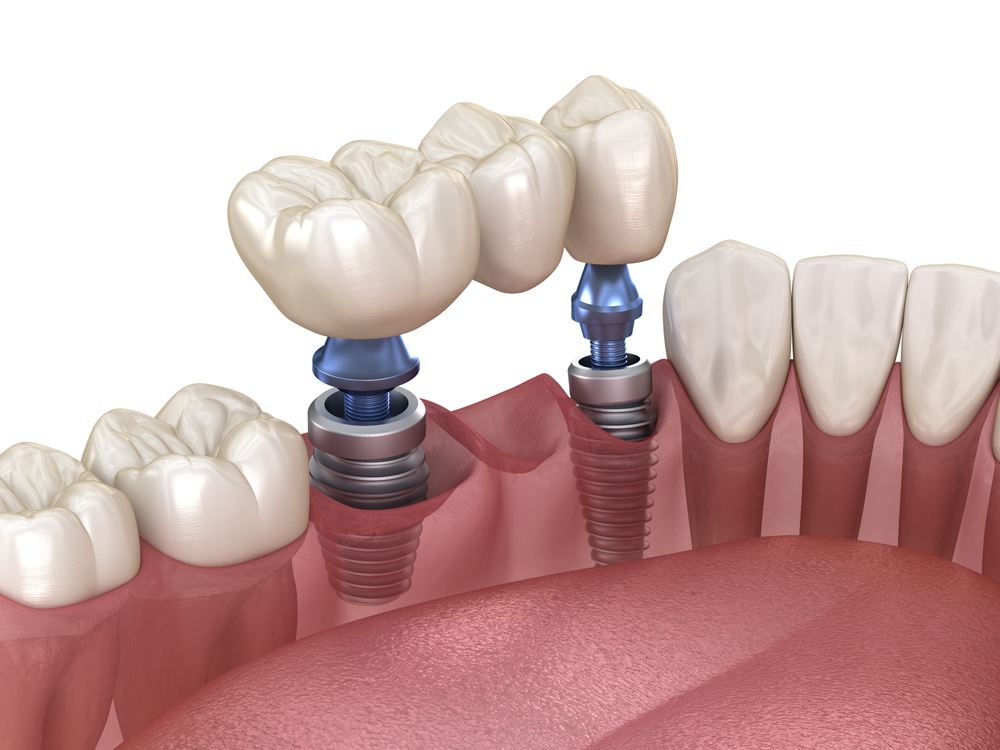
- Understanding the Dental Implant Bridge
- Key Factors Influencing the Cost of a Dental Implant Bridge
- Preparatory Procedures That Affect Your Final Bill
- Breaking Down the Costs Step-by-Step
- Does Dental Insurance Cover Implant Bridges
Losing multiple teeth can take a significant toll on your confidence, your diet, and your overall oral health. If you are exploring options to restore your smile, you have likely come across the highly effective solution of a dental implant bridge. Naturally, one of the first questions that comes to mind is about the financial commitment. Investing in your smile is a major decision, and understanding the costs involved empowers you to make the best choice for your health and your budget.
If you live in Burke, VA, and are considering this life-changing procedure, we want to provide you with complete transparency. At Shield Dental Care, we believe that informed patients make the most confident decisions. This comprehensive guide will break down everything you need to know about the financial aspects of an implant-supported bridge, from the factors that influence the final price tag to the long-term value it brings to your life.
Understanding the Dental Implant Bridge
Before diving into the costs, we need to clearly define what this procedure entails. Unlike a traditional bridge that relies on your surrounding natural teeth for support, an implant-supported bridge uses titanium posts surgically placed into your jawbone. These posts act as artificial tooth roots. Once they heal and fuse with your bone, they provide an incredibly stable foundation for a custom-made bridge that spans the gap in your smile.
This approach is fundamentally different from older methods of replacing missing teeth. Because it does not rely on neighboring teeth, it preserves your healthy natural enamel. Furthermore, the implants stimulate your jawbone, preventing the bone loss that inevitably follows tooth extraction. This combination of structural support, aesthetic appeal, and health preservation makes the implant bridge a premier restorative option.
Key Factors Influencing the Cost of a Dental Implant Bridge
There is no single flat rate for an implant-supported bridge. Every patient has a unique oral anatomy, and every treatment plan is customized to meet those specific needs. Several distinct variables come together to determine the final cost of your procedure.
The Number of Implants Required
The most significant factor in your treatment cost is the number of dental implants needed to support the bridge. If you are missing three consecutive teeth, you will typically need two implants—one at each end of the gap—to support a three-unit bridge.
However, if you are missing four, five, or more teeth in a row, you may require additional implants to ensure the bridge is stable and can withstand the intense forces of biting and chewing. Each individual titanium implant adds to the surgical time, the material costs, and the overall complexity of the procedure. During your consultation, your dentist will evaluate your jaw and determine the exact number of implants necessary to provide a secure, lasting result.
Material Choice for the Final Bridge
The bridge itself—the visible portion of your restoration—can be crafted from several different materials. The material you choose impacts both the aesthetic outcome and the final price.
High-quality materials like zirconia and advanced porcelain offer the most natural, translucent appearance. They mimic the way natural teeth reflect light and are highly resistant to staining and chipping. While these premium materials carry a higher upfront cost, their durability and lifelike beauty make them a popular choice. Alternative materials, such as porcelain fused to metal (PFM), might be slightly more affordable but can sometimes show a dark line near the gums over time. We will help you weigh the benefits of each material so you can choose the one that aligns with your aesthetic goals and your budget.
Diagnostic Imaging and Technology
Precision is paramount when placing dental implants. Advanced technology ensures that your implants are placed in the optimal position for strength and longevity while avoiding vital structures like nerves and sinus cavities.
At our practice, we utilize high-tech dental care including 3D cone beam computed tomography (CBCT) scanners. These advanced imaging systems provide a comprehensive, three-dimensional view of your jawbone, teeth, and facial structures. The cost of these diagnostic scans is factored into your treatment plan. While advanced imaging adds a modest fee to the initial stages, it drastically reduces the risk of complications and ensures a highly successful surgical outcome.
Preparatory Procedures That Affect Your Final Bill
Many patients require some preparatory work before their jaw is ready to receive dental implants. These preliminary treatments add to the overall timeline and cost of your restoration journey.
Tooth Extractions
If you still have failing, severely decayed, or damaged teeth in the area where the bridge will be placed, they must be removed first. The complexity of the extraction influences the cost. A simple extraction of a highly mobile tooth will cost less than a surgical extraction of a tooth broken off at the gum line. We handle tooth extractions with the utmost care, ensuring you remain comfortable throughout the process.
Bone Grafting Procedures
When you lose a tooth, the jawbone in that area immediately begins to shrink because it no longer receives the necessary stimulation from chewing. If your teeth have been missing for a while, or if you have suffered from advanced gum disease, you might lack the bone density required to anchor an implant securely.
In these cases, a bone graft is necessary. This procedure involves adding bone grafting material to your jaw to build up its width and height. The cost of a bone graft depends on the amount of material needed and the complexity of the graft. While it adds an extra step and additional cost, building a solid foundation is absolutely essential for the long-term success of your implant bridge.
Sinus Lifts
If you are receiving implants in your upper jaw, specifically in the back near your molars, you might require a sinus lift. The maxillary sinuses sit just above your upper teeth. If you have lost bone in this area, there may not be enough room to place an implant without penetrating the sinus cavity. A sinus lift gently raises the sinus membrane and places bone graft material beneath it. Like standard bone grafting, this specialized procedure adds to the overall cost but ensures the safety and stability of your upper implants.
Breaking Down the Costs Step-by-Step
Understanding how the costs are distributed throughout your treatment can help you budget effectively. An implant bridge is not billed all at once; rather, the costs are spread across the different phases of your care.
Phase 1: Consultation and Diagnostics
Your journey begins with a thorough evaluation. This phase includes your exam, 3D imaging, and the development of your customized surgical plan. This is a relatively small portion of the total cost, but it sets the stage for a flawless procedure.
Phase 2: Preparatory Surgeries
If you need extractions, bone grafts, or a sinus lift, these procedures take place next. The costs here vary wildly depending on the condition of your mouth. Some patients skip this phase entirely if their jawbone is dense and healthy.
Phase 3: Surgical Placement of the Implants
This phase represents a significant portion of the total investment. It covers the surgical procedure, the anesthesia or sedation used to keep you comfortable, and the high-grade titanium implants themselves.
Phase 4: Abutments and Final Restoration
After your mouth has healed and the implants have fused with your jawbone (a process called osseointegration), you will return for the final phase. This includes the cost of the abutments—the connector pieces that attach to the implants—and the custom-crafted bridge. The laboratory fees for creating your beautiful new teeth are included in this final phase.
Does Dental Insurance Cover Implant Bridges?
Navigating dental insurance can feel overwhelming. Coverage for dental implants varies dramatically from one insurance provider to the next. Historically, many insurance companies viewed implants as an elective or cosmetic procedure and offered little to no coverage.
However, the landscape is shifting. Because implants are now recognized as the standard of care for missing teeth, more insurance plans are beginning to offer partial coverage. While your policy might not cover the surgical placement of the titanium posts, it will often cover a percentage of the final bridge, just as it would a traditional bridge. Additionally, insurance frequently covers preparatory procedures like tooth extractions and basic diagnostic X-rays.
Our experienced front office team at Shield Dental Care is highly skilled at maximizing your insurance benefits. We will communicate directly with your provider, submit the necessary documentation, and help you understand exactly what your policy covers before any treatment begins.
Financing Options at Shield Dental Care
We firmly believe that financial concerns should never stand between you and a healthy, complete smile. Because an implant bridge is a significant investment, we offer flexible financing solutions to make your treatment manageable for your monthly budget.
We partner with reputable third-party financing companies that offer low-interest and interest-free payment plans for qualifying patients. This allows you to break up the total cost of your procedure into predictable monthly installments. You do not have to wait years to afford your new smile; you can get the care you need now and pay for it over time. To learn more about how to fund your treatment seamlessly, you can explore the options to make a payment through our streamlined financial services.
Comparing Implant Bridges to Traditional Alternatives
When weighing the cost of an implant bridge, it is crucial to compare it against the alternatives: traditional tooth-supported bridges and removable partial dentures.
At face value, a traditional bridge or a removable denture will almost always cost less upfront than an implant-supported solution. However, focusing only on the initial price tag ignores the long-term financial reality of dental care.
Traditional bridges require your dentist to grind down healthy adjacent teeth to serve as anchors. Over time, these anchor teeth bear an excessive amount of stress, making them highly susceptible to decay, fracture, and eventual failure. When a traditional bridge fails—often after 7 to 10 years—you have to pay to replace the bridge, and you may also need root canals or extractions for the damaged anchor teeth.
Removable partial dentures also present hidden costs. They require messy adhesives, special cleaning solutions, and frequent professional adjustments as your jawbone inevitably shrinks and changes shape over time. Eventually, partial dentures need to be completely remade to fit your altered gum line.
Long-Term Financial Benefits of Choosing Implants
When you look at tooth replacement through a long-term lens, the implant bridge often proves to be the most cost-effective choice.
Dental implants boast a success rate of over 95%, and with excellent oral hygiene, the titanium posts can last the rest of your life. The ceramic bridge attached to the implants may eventually need replacement due to normal wear and tear after 15 or 20 years, but the surgical foundation remains intact.
By choosing implants, you avoid the continuous cycle of replacing failing dental work. You protect your remaining natural teeth from damage. You halt bone loss, preserving your facial structure and avoiding the need for complex reconstructive surgeries down the line. You make a single, upfront investment in a solution designed to last, saving yourself significant money, time, and discomfort in the decades to come.
Conclusion: Taking the Next Step in Burke, VA
Living with missing teeth diminishes your quality of life, but you do not have to settle for gaps in your smile or uncomfortable removable dentures. An implant bridge provides a permanent, beautiful, and highly functional solution that allows you to eat, speak, and laugh with absolute confidence.
While the cost of a dental implant bridge reflects the high-quality materials, advanced technology, and surgical expertise required, the resulting improvement in your daily life is truly invaluable. At Shield Dental Care in Burke, VA, we are dedicated to providing outstanding restorative care tailored to your unique clinical needs and financial situation.
We invite you to sit down with us for a personalized consultation. We will evaluate your smile, discuss your goals, outline exactly what your treatment will entail, and provide a clear, detailed breakdown of the costs. Do not let financial uncertainty prevent you from achieving the smile you deserve. Contact us today to schedule your appointment and take the first step toward a complete, healthy, and radiant smile.
Top Rated Dentist in Burke VA
At Shield Dental Care, we take pride in being a top-rated Dentist in Burke, VA. We are dedicated to enhancing your charming smile. Our philosophy revolves around your smile being a beautiful reflection of your persona, a unique signature that merits the finest attention.
Tour Our Burke Dental Office
Experience the best of dental technology and service at Shield Dental Care. Situated conveniently at 6505 Sydenstricker Rd B, Burke, VA 22015,
Related Blogs
- What to Expect at Your Cosmetic Dentistry Consultation
- 5 Signs You Should See a Cosmetic Dentist
- How Much Does a Smile Makeover Cost? A Complete Guide
There is no flat rate for an implant-supported bridge because the total depends on the number of implants needed, the material chosen for the bridge, diagnostic imaging, and any preparatory work such as extractions, bone grafting, or a sinus lift. Costs are spread across consultation, prep surgeries, implant placement, and the final restoration. Though it costs more upfront than a traditional bridge or denture, it preserves neighboring teeth and jawbone, making it a lasting long-term value.