
- Understanding the Basics of Tooth Replacement
- Comparing Bone Health and Preservation
- Analyzing Surgical Complexity and Recovery
- Aesthetic Outcomes and Natural Appearance
- Evaluating Cost-Effectiveness
Losing multiple consecutive teeth can severely impact your ability to chew, speak, and smile with confidence. When you face the challenge of replacing several missing teeth, choosing the right restorative solution becomes a critical priority. You need a treatment that offers durability, natural aesthetics, and long-term structural support.
For patients missing three or more teeth in a row, modern dentistry typically offers two premium solutions. You can replace each missing tooth with an individual dental implant, or you can restore the entire gap using a single implant-supported bridge. Both options provide permanent, secure results, but they function differently beneath the gum line.
At Shield Dental Care, we believe in empowering our patients with clear, comprehensive information. This guide will compare these two restorative methods in detail. We will break down the mechanical differences, surgical requirements, and financial considerations associated with each option.
Here are the key takeaways you will learn:
- The structural differences between single implants and an implant bridge.
- How each option impacts your long-term jawbone health and density.
- The differences in surgical complexity and recovery timelines.
- How to evaluate the cost-effectiveness of both restorative treatments.
- Which solution delivers the best aesthetic outcomes for your unique smile.
Understanding the Basics of Tooth Replacement
Before we compare the pros and cons, we must define how each treatment works. Both options utilize titanium posts surgically placed into your jawbone. However, the way these posts support your artificial teeth differs significantly.
What are Individual Dental Implants?
An individual dental implant is a standalone tooth replacement system. It consists of three parts: a titanium post, an abutment, and a custom dental crown. If you are missing three consecutive teeth, choosing this route means you will receive three separate titanium posts.
Each post acts as an artificial root for a single missing tooth. The dentist places each implant directly into the jawbone. After the bone heals around the posts, the dentist attaches a separate, individual ceramic crown to every single implant. This method mimics the exact anatomical structure of natural teeth perfectly.
What is a Dental Implant Bridge?
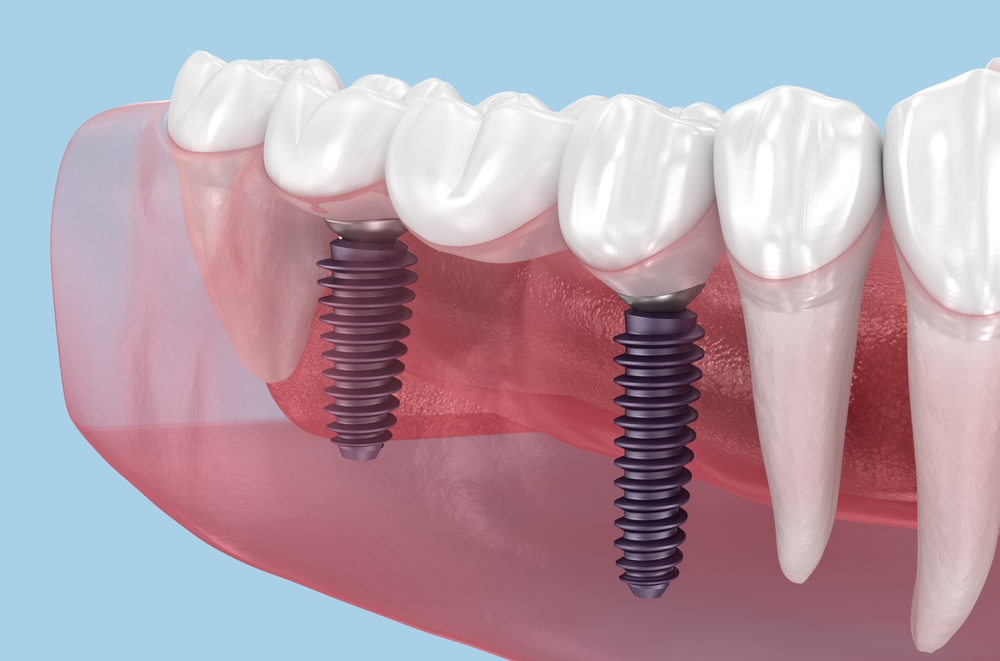
A dental implant bridge takes a more streamlined approach to replacing a row of missing teeth. Instead of placing an implant for every single missing tooth, this method uses fewer implants to support a connected row of artificial teeth.
For example, if you are missing three or four teeth in a row, a dentist will typically place just two titanium implants at either end of the gap. These two implants act as the anchors. A custom-made dental bridge, featuring three or four connected artificial teeth, is then securely fastened to those two anchoring implants. The pontics (the middle artificial teeth) rest gently against the gum line without requiring an implant directly underneath them.
Comparing Bone Health and Preservation
One of the most significant advantages of implant dentistry is its ability to preserve your jawbone. Your jawbone requires constant stimulation from chewing forces to remain dense and healthy. Let us examine how each option handles this biological requirement.
How Individual Implants Stimulate the Jawbone
Individual implants provide the maximum level of bone stimulation possible. Because each missing tooth is replaced with its own titanium root, the chewing forces are distributed evenly across the entire length of the jawbone.
This one-to-one replacement ratio ensures that every millimeter of the bone receives the necessary pressure to prevent resorption. If you want to mimic the exact physiological function of your natural teeth and maximize bone preservation, individual implants offer the highest level of structural support.
The Impact of an Implant Bridge on Bone Density
An implant-supported bridge also offers excellent bone preservation, but it works slightly differently. The titanium implants at the ends of the bridge provide strong, direct stimulation to the bone in those specific areas. The bone surrounding these anchor points will remain dense and healthy.
However, the bone directly beneath the middle pontics (the suspended artificial teeth) does not receive direct stimulation from an artificial root. Over many years, you may experience a very slight loss of bone volume directly beneath the center of the bridge. For most patients, this minor change is biologically insignificant and does not affect the stability or appearance of the restoration.
Analyzing Surgical Complexity and Recovery
Any procedure involving dental implants requires oral surgery. The number of implants you receive directly impacts the complexity of the procedure, the time spent in the dental chair, and your overall recovery experience.
The Surgical Process for Individual Implants
Placing an individual implant for every missing tooth requires a more extensive surgical procedure. The dentist must prepare a separate surgical site for each titanium post. If you are replacing four teeth, you will undergo surgery for four individual implants.
This approach increases the time required for the surgery. It also requires the patient to have excellent, uniform bone density across the entire gap. If the bone is thin in the middle of the gap, you will need extensive bone grafting before the dentist can place the individual implants. Consequently, the recovery process involves managing multiple surgical sites, which can result in slightly more swelling and a longer healing timeline.
Streamlined Surgery with an Implant Bridge
Opting for an implant bridge significantly simplifies the surgical process. Because the dentist only needs to place two implants to replace three or four teeth, the surgery is much faster and less invasive. Fewer surgical sites mean less tissue manipulation, reduced swelling, and a generally more comfortable recovery period.
Furthermore, an implant bridge offers strategic flexibility. If the bone in the center of your gap is too thin to support an implant, the dentist can angle the two anchoring implants into areas where the bone is thicker and stronger. This often allows patients to bypass the need for complex bone grafting procedures entirely. By utilizing high-tech dental care, our team can pinpoint the optimal placement for these anchors with incredible precision.
Aesthetic Outcomes and Natural Appearance
When replacing teeth, especially those visible when you smile, aesthetics play a massive role in your decision. You want a restoration that blends flawlessly with your natural teeth and gum line. Both options deliver beautiful results, but they achieve them in different ways.
Achieving Seamless Results with Single Implants
Individual implants offer unparalleled aesthetic flexibility. Because each tooth emerges from the gum line on its own titanium root, the dentist can sculpt the gum tissue around each crown individually. This creates a highly natural emergence profile.
You can floss between individual implant crowns exactly as you would with natural teeth. The small spaces between the teeth look completely natural because they are structurally identical to a natural smile. For patients heavily focused on the absolute highest tier of cosmetic dentistry, individual implants provide the most lifelike appearance possible.
Cosmetic Benefits of Implant-Supported Bridges
An implant-supported bridge also delivers stunning aesthetic results. Modern dental laboratories craft these bridges from high-quality porcelain or zirconia, which mimic the translucency of natural enamel perfectly.
The artificial teeth are fused together, meaning you cannot floss vertically between them. However, skilled ceramists design the bridge with subtle grooves and shading to create the illusion of individual teeth. A beautifully crafted bridge will look indistinguishable from natural teeth to anyone you interact with. The aesthetic difference between the two options is often only noticeable to a trained dental professional examining your mouth up close.
Evaluating Cost-Effectiveness
Financial considerations often play a major role in determining the right treatment plan. Dental implants represent a significant investment in your long-term health, but the cost structure varies dramatically based on the method you choose.
The Financial Investment of Individual Implants
Choosing individual implants is the most expensive way to replace multiple missing teeth. You are paying for a separate titanium post, a separate abutment, and a separate custom crown for every single missing tooth. You must also factor in the cost of a longer, more complex surgical procedure and potential bone grafting.
If you are replacing three teeth, you are paying the full price of a single tooth replacement three times over. While this provides the absolute gold standard in structural tooth replacement, the total cost can quickly exceed the budget of many patients.
Why an Implant Bridge Can Be More Budget-Friendly
An implant-supported bridge is significantly more cost-effective. Because you are only paying for two titanium implants and two abutments to support a multi-tooth bridge, the material and surgical costs are vastly reduced.
You receive the permanence and stability of dental implants without paying for a titanium root beneath every single tooth. For patients looking to maximize their budget while still receiving a permanent, non-removable, and highly functional restoration, the implant bridge is almost always the superior financial choice.
Maintenance and Long-Term Care
Protecting your investment requires excellent daily oral hygiene. While titanium implants cannot develop cavities, the gum tissue surrounding them is still vulnerable to periodontal disease. How you clean your new teeth will depend on the restoration you choose.
Cleaning Single Implants
Maintaining individual implants is incredibly straightforward. You care for them exactly like your natural teeth. You brush them twice a day and use standard dental floss to clean between each crown. There are no special tools or techniques required. This effortless maintenance routine is a major selling point for patients who want the simplest daily oral care regimen.
Oral Hygiene for an Implant Bridge
Cleaning an implant-supported bridge requires a slight adjustment to your routine. Because the artificial teeth are connected, you cannot use traditional string floss to clean between them. Instead, you must clean underneath the bridge to remove plaque and food particles.
You will need to use special floss threaders or interdental brushes to guide the floss beneath the pontics. Many patients find that investing in a water flosser makes cleaning under an implant bridge fast, easy, and highly effective. While it takes an extra minute of effort each night, maintaining a healthy bridge is a very manageable process.
Which Option is Right for Your Smile?
Deciding between individual implants and an implant bridge requires a careful evaluation of your specific clinical needs, lifestyle, and financial goals. There is no universally perfect answer, only the answer that is perfect for you.
| Factor | Individual Implants | Implant-Supported Bridge |
|---|---|---|
| Implants placed | One for each missing tooth | Fewer implants support several teeth |
| Bone stimulation | Delivered at every tooth position | Delivered at the implant sites that anchor the bridge |
| Surgical scope | More placement sites | Fewer placements and a more streamlined surgery |
| Cleaning | Each implant is cleaned like a natural tooth | Requires cleaning beneath the bridge span |
| Cost consideration | Rises with the number of teeth replaced | Often more economical across several adjacent teeth |
| Best suited to | Gaps that are separated rather than adjacent | Several missing teeth in a row |
Ideal Candidates for Single Implants
Individual implants are typically the best choice if you are replacing only two adjacent teeth. They are also ideal for patients who have ample, healthy jawbone density across the entire gap and want to avoid any potential bone resorption. If budget is not a primary concern and you desire the most anatomically correct replacement possible, individual implants are the gold standard.
When an Implant Bridge Makes the Most Sense
An implant-supported bridge is usually the highly recommended choice for patients missing three or more consecutive teeth. It provides incredible stability and a beautiful appearance at a much more accessible price point. It is also the superior option for patients who lack the bone density required for multiple implants and wish to avoid extensive bone grafting surgeries.
Take the Next Step for Your Oral Health
Rebuilding your smile is a major decision, but you do not have to make it alone. Understanding the nuances of bone health, surgical complexity, and long-term maintenance is the first step toward reclaiming your confidence and chewing function.
Our dedicated team is here to evaluate your unique oral anatomy and help you choose the ideal restorative path. We invite you to meet the team at Shield Dental Care to learn more about our patient-centered approach to implant dentistry.
If you are ready to explore your tooth replacement options in a comfortable, pressure-free environment, please contact us today to schedule your comprehensive consultation. We look forward to helping you achieve a strong, healthy, and beautifully restored smile.
Top Rated Dentist in Burke VA
At Shield Dental Care, we take pride in being a top-rated Dentist in Burke, VA. We are dedicated to enhancing your charming smile. Our philosophy revolves around your smile being a beautiful reflection of your persona, a unique signature that merits the finest attention.
Tour Our Burke Dental Office
Experience the best of dental technology and service at Shield Dental Care. Situated conveniently at 6505 Sydenstricker Rd B, Burke, VA 22015,
Related Blogs
- What to Expect at Your Cosmetic Dentistry Consultation
- 5 Signs You Should See a Cosmetic Dentist
- How Much Does a Smile Makeover Cost? A Complete Guide
Both options permanently replace missing teeth, but the trade-off is thoroughness versus practicality. Individual implants give each tooth its own titanium root, maximizing bone stimulation and the most natural result, though they cost more and require more surgery. An implant bridge anchors connected teeth on fewer implants, streamlining surgery and lowering cost. Choose individual implants for a couple of teeth with ample bone; choose a bridge for three or more consecutive gaps.