
- The Morning of Your Surgery: Preparation and Arrival
- Keeping You Comfortable: Anesthesia and Sedation Options
- The Surgical Process: Step-by-Step
- Immediately After Surgery: Waking Up and Recovery
- Post-Operative Care: Your Role in the Healing Process
Walking into a dental office for an oral surgery procedure naturally brings up feelings of anxiety and uncertainty. If you are preparing for a dental implant bridge, you might be wondering exactly what will happen once you sit in the chair. Knowing the details of your procedure is the best way to replace fear with confidence.
At Shield Dental Care, we believe that informed patients are relaxed patients. We want you to feel completely comfortable and prepared for your big day. Replacing missing teeth with an implant-supported restoration is a life-changing decision. We are here to make the surgical phase as smooth and stress-free as possible.
This comprehensive guide will walk you through your entire surgery day. We will cover how to prepare that morning, the sedation options available to keep you comfortable, and the step-by-step surgical process. By the time you finish reading, you will know exactly what to expect from your procedure and your immediate recovery.
The Morning of Your Surgery: Preparation and Arrival
Your successful surgery actually begins before you even leave your house. Proper preparation ensures that your body is ready for the procedure and the anesthesia. When you schedule your surgery, our team will give you a specific set of preoperative instructions.
Fasting and Medication Guidelines
If you choose to receive conscious or intravenous (IV) sedation, you must follow strict fasting guidelines. Typically, we ask patients to stop eating and drinking at least eight hours before their appointment. Having an empty stomach is crucial for your safety while under sedation.
You should also review your daily medications with your dentist well in advance. We will let you know which prescriptions you should take on the morning of your surgery with a small sip of water. If you take blood thinners or certain supplements, we might ask you to pause them a few days prior to minimize bleeding. Always follow the exact medication schedule provided by our office.
We highly recommend wearing loose, comfortable clothing to your appointment. Choose a shirt with short sleeves so our team can easily monitor your vital signs and administer IV medications if needed.
Arriving at the Office
When you walk through the doors of Shield Dental Care, our friendly front desk staff will greet you. We will handle any final paperwork and answer any last-minute questions you might have. You must bring a responsible adult with you to the office. Because of the sedation, you will not be allowed to drive yourself home. Your designated driver will wait in our comfortable reception area during your procedure.
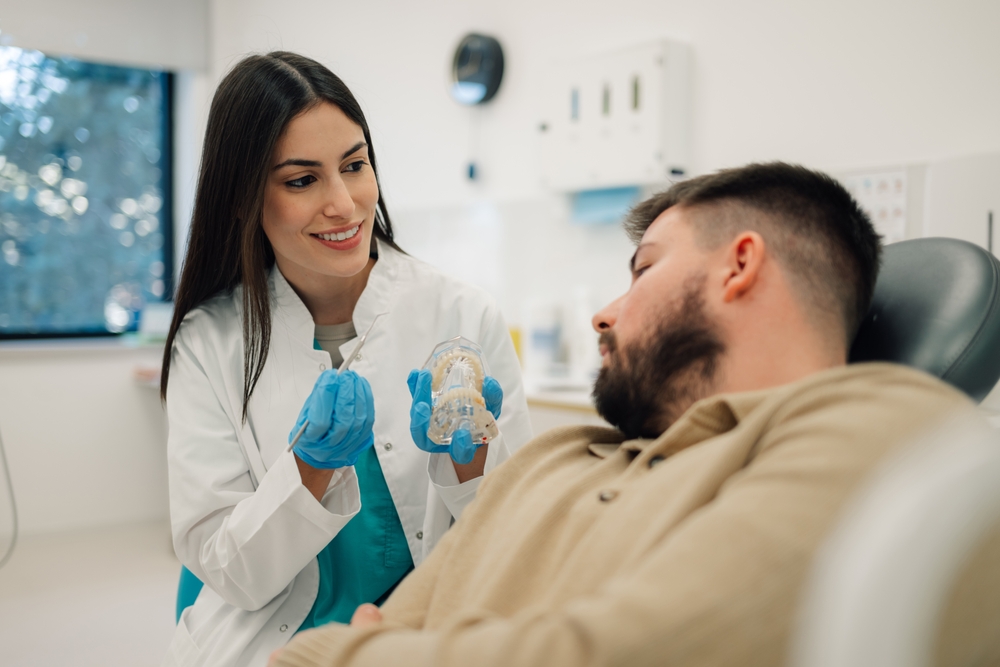
Once we call you back, a dental assistant will escort you to the surgical operatory. We have designed our treatment rooms to feel calm and relaxing. We will help you get settled into the chair, provide a warm blanket if you feel chilly, and begin connecting the monitors that track your heart rate, blood pressure, and oxygen levels throughout the surgery.
Keeping You Comfortable: Anesthesia and Sedation Options
Patient comfort is the cornerstone of our practice. The idea of oral surgery often makes people imagine pain, but modern implant dentistry is incredibly gentle. We use advanced anesthesia and sedation techniques to ensure you feel absolutely no pain during the placement of your dental implants.
Before your surgery day, you and your dentist will discuss the best sedation approach for your specific needs and anxiety levels.
Local Anesthesia for Complete Numbing
Regardless of the sedation method you choose, we always use a highly effective local anesthetic. This medication numbs the surgical site completely. We administer the local anesthetic precisely, ensuring that the gum tissue and the underlying jawbone lose all sensation of pain.
Because the jawbone actually contains very few pain-sensing nerves, numbing the area is usually quite simple. Once the local anesthesia takes effect, you will only feel minor pressure or movement during the surgery. You will not feel anything sharp or painful.
Nitrous Oxide and Oral Sedation
If you feel mildly anxious about your procedure, we might recommend nitrous oxide, commonly known as laughing gas. You breathe this sweet-smelling gas through a small mask placed over your nose. It works within minutes to induce a deep sense of relaxation and well-being. Once we remove the mask, the effects wear off almost instantly.
For moderate anxiety, oral conscious sedation is an excellent choice. Your dentist will prescribe a calming medication for you to take about an hour before your appointment. This medication makes you feel deeply relaxed and slightly drowsy. While you remain awake and able to respond to instructions, you will feel completely detached from the procedure. Many patients remember very little about the surgery afterward.
Intravenous (IV) Sedation
For longer procedures or patients with severe dental anxiety, IV sedation offers the highest level of comfort. We administer the sedative medication directly into your bloodstream, allowing us to control the exact level of relaxation.
Under IV sedation, you enter a state of deep relaxation. You will likely fall into a light sleep and have no memory of the surgery at all. Our specialized team closely monitors your vital signs every single second you are under IV sedation, ensuring your utmost safety. When you wake up, your new dental implants will already be in place.
The Surgical Process: Step-by-Step
Once you are fully sedated and the surgical site is completely numb, your dentist begins the procedure. Placing a dental implant bridge requires immense precision and a gentle touch. Here is exactly what happens while you rest in the chair.
Preparing the Surgical Site
The first step involves accessing the jawbone where the titanium implants will go. Your dentist makes a small, precise incision in your gum tissue. This incision gently separates the gums to expose the healthy bone underneath.
If you have any failing natural teeth still present in the area, we will perform a careful extraction at this time. We use specialized techniques to remove the teeth gently, preserving as much of the surrounding bone as possible. Once the bone is exposed and prepared, we smooth the ridge to create a perfect foundation for the implants.
Precision Implant Placement
Next, we prepare the jawbone to receive the titanium posts. Using a series of specialized, quiet instruments, your dentist creates a small channel in the bone. We gradually widen this space until it perfectly matches the precise dimensions of your custom implant.
At Shield Dental Care, we rely heavily on high-tech dental care to ensure this step is flawless. We often use custom 3D-printed surgical guides during this phase. The guide fits over your gums and directs the instruments to the exact angle and depth we planned on our computer beforehand.
Once the channel is ready, we carefully insert the titanium implant into the jawbone. We torque it into place until it is perfectly secure. Depending on the size of your bridge, we will place two or more implants to support the final restoration.
Suturing and Initial Healing
After we verify that the implants are securely positioned, we begin the closing process. If your implants need to heal beneath the gums for a few months, we will place a tiny cover screw over the top of each implant. We then gently bring the gum tissue back together over the implants.
Your dentist uses a few small sutures to close the incisions. We typically use dissolvable stitches that disappear on their own after a week or two, saving you from needing a stitch removal appointment. If we decide to use traditional sutures, we will schedule a quick follow-up visit to remove them.
In some cases, we might attach a temporary healing abutment instead of a cover screw. This small metal cylinder protrudes slightly through the gumline, shaping the gum tissue as it heals around the implant. Your dentist will choose the best method based on your specific treatment plan.
Immediately After Surgery: Waking Up and Recovery
As your dentist finishes placing the final sutures, we stop administering the sedative medications. If you received IV sedation, you will gently wake up over the next 10 to 15 minutes.
The First Few Hours
You will likely feel groggy and slightly disoriented as you wake up. This is a completely normal reaction to the sedation. Our dental assistants will stay right by your side, monitoring your vital signs as you regain full awareness.
Because the local anesthesia is still active, your mouth will feel numb and pleasantly comfortable. You might have some gauze placed over the surgical sites to help control any minor bleeding. We will ask you to bite down gently on this gauze for about 30 minutes to help a healthy blood clot form.
Once you are fully alert and stable, we will invite your designated driver back into the operatory. We will review all your post-operative care instructions with both of you, ensuring you know exactly how to care for your mouth at home.
Placing the Temporary Bridge (If Applicable)
We understand that leaving the office with a gap in your smile is a major concern. Depending on your treatment plan and the initial stability of your implants, we may attach a temporary bridge right after surgery.
If your implants are strong enough to support a temporary restoration, we will secure a lightweight bridge to the posts before you leave. This temporary bridge allows you to smile confidently and speak normally while your jawbone heals. You must treat this temporary bridge delicately, sticking to a strict soft-food diet to avoid putting too much pressure on the healing implants.
If we determine that the implants need time to heal without any pressure, we will provide a removable temporary appliance, such as a partial denture. We will make sure this appliance fits comfortably over your healing gums so you never have to go without teeth.
Post-Operative Care: Your Role in the Healing Process
The success of your dental implant bridge relies heavily on how well you care for your mouth after surgery. While we do the heavy lifting in the operatory, you are in charge of the recovery phase. Following our instructions carefully prevents complications and promotes rapid healing.
Managing Swelling and Discomfort
As the local anesthesia wears off later in the day, you will begin to feel some mild discomfort. Most patients are pleasantly surprised to find that implant surgery causes less pain than a tooth extraction.
You can expect some swelling and bruising around your jaw and cheeks. This is a natural part of your body’s healing response. To keep swelling down, apply an ice pack to the outside of your face for 20 minutes at a time during the first 48 hours. Keep your head elevated on a few extra pillows when you sleep to further reduce inflammation.
We will likely prescribe pain medication or recommend over-the-counter anti-inflammatories like ibuprofen. Take these medications exactly as directed, even if you do not feel pain immediately. Staying ahead of the discomfort is much easier than trying to catch up once it starts. We may also prescribe a prophylactic antibiotic to prevent infection. You must complete the entire course of antibiotics.
Diet and Nutrition After Surgery
Your diet plays a critical role in your recovery. For the first few days, you must stick to a strict liquid and very soft-food diet. Excellent options include protein shakes, yogurt, applesauce, mashed potatoes, and lukewarm soups.
Do not use a straw for at least a week after your surgery. The suction created by a straw can dislodge the blood clots forming over your surgical sites, leading to a painful condition called dry socket. Also, avoid extremely hot foods or spicy meals, as these can irritate your healing gums.
As your comfort improves, you can gradually introduce slightly firmer foods, like scrambled eggs or flaky fish. However, you must avoid hard, crunchy, or chewy foods until your dentist explicitly clears you to eat them. Biting into something hard too soon can shift the implants before they fuse with your bone.
Keeping Your Mouth Clean
Maintaining excellent oral hygiene is vital to prevent bacteria from infecting your surgical sites. However, you must be incredibly gentle.
Do not brush the surgical area directly for the first few days. You can carefully brush your other teeth, but keep the bristles away from the sutures. We will prescribe a special antimicrobial mouthwash for you to use. Instead of swishing vigorously, simply place the liquid in your mouth, tilt your head from side to side, and let it fall gently into the sink.
After about a week, you can begin lightly brushing the surgical sites with an extra-soft toothbrush. Our team will provide detailed instructions on when and how to resume your normal flossing routine.
The Healing Phase: Osseointegration
The visible healing of your gums only takes a few weeks. However, the most crucial part of your recovery happens beneath the surface over the next three to six months.
This process is called osseointegration. Your jawbone cells actively grow and attach to the microscopic grooves on the titanium implants. This biological fusion creates an incredibly strong bond, locking the implants permanently into your jaw.
During this waiting period, you will visit our office for a few brief checkups. We will take quick x-rays to monitor the bone growth and ensure the implants are integrating perfectly. Once osseointegration is complete, you will be ready for the final step: attaching your beautiful, permanent ceramic bridge.
When to Call the Dentist
While complications from dental implant surgery are rare, we want you to feel supported throughout your entire recovery. You should never hesitate to reach out to our team if you have questions or concerns.
Some minor bleeding, swelling, and soreness are completely normal for the first few days. However, you should contact us immediately if you experience any of the following symptoms:
- Severe, throbbing pain that does not improve with medication.
- Excessive bleeding that saturates the gauze pads quickly.
- Swelling that worsens after the third day.
- A fever or chills.
- Numbness in your lips, tongue, or chin that persists long after the local anesthesia should have worn off.
If you experience a severe issue outside of our normal business hours, we provide emergency dentistry services. Your health and safety are our primary concerns, and we are always here to help you navigate your recovery safely.
Trust Your Smile to Shield Dental Care
Choosing to replace missing teeth with a dental implant bridge is an incredible investment in your long-term health and confidence. We know that the thought of oral surgery can feel daunting, but you do not have to face it alone.
When you trust our dental team with your care, you gain a partner dedicated to your comfort and success. We combine advanced surgical technology with a compassionate, gentle approach to ensure your surgery day is smooth, predictable, and completely stress-free.
Do not let fear prevent you from achieving the strong, beautiful smile you deserve. If you have any remaining questions about what to expect during your procedure, or if you are ready to start your journey toward a restored smile, contact us today. Let Shield Dental Care guide you safely through every step of your dental implant experience.
Top Rated Dentist in Burke VA
At Shield Dental Care, we take pride in being a top-rated Dentist in Burke, VA. We are dedicated to enhancing your charming smile. Our philosophy revolves around your smile being a beautiful reflection of your persona, a unique signature that merits the finest attention.
Tour Our Burke Dental Office
Experience the best of dental technology and service at Shield Dental Care. Situated conveniently at 6505 Sydenstricker Rd B, Burke, VA 22015,
Related Blogs
- What to Expect at Your Cosmetic Dentistry Consultation
- 5 Signs You Should See a Cosmetic Dentist
- How Much Does a Smile Makeover Cost? A Complete Guide
Dental implant bridge surgery is a planned, comfortable procedure. On surgery day you follow fasting and medication instructions, arrive with a designated driver, and receive local anesthetic plus your chosen sedation, from nitrous oxide to oral or IV sedation. The dentist makes a small gum incision, precisely places titanium implants, and sutures the site, sometimes attaching a temporary bridge. Modern technique means you feel only pressure, and recovery is often less painful than a tooth extraction.