
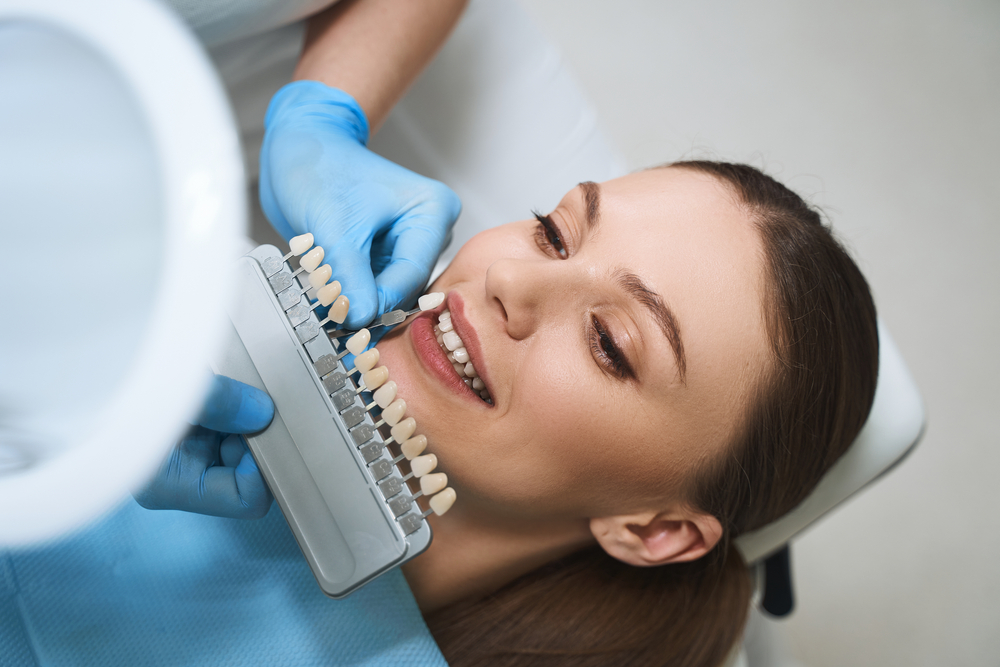
The teeth that go on your implants are usually made by a dental laboratory, not in the dentist’s chair. That lab may be local, elsewhere in the US or overseas. You are entitled to ask where your teeth will be made and what they are made from. Most patients never think to ask.
For a single crown, it may not seem to matter much. For a full arch of teeth that you will chew with every day for years, it is worth a few questions. This article explains what dental labs do, why some work is sent abroad, what a “Made in USA” claim should mean, and what to ask before you agree to treatment.
What a dental lab does
Your dentist diagnoses, plans and places the implants, then takes impressions or digital scans, records your bite and chooses the shade. The lab turns that information into the physical teeth. For a full arch, that typically means:
- Designing the arch in software, from the tooth shapes to the gum contour.
- Making a try-in or the temporary teeth, so the shape and bite can be checked in your mouth.
- Milling the final arch, often from a solid block of zirconia, or building it from acrylic teeth on a framework.
- Staining, glazing or layering porcelain on the front teeth so they look natural.
- Fitting the connections that screw the arch onto your implants.
Much of the quality of a full arch, including how natural it looks, how the bite feels and how easy it is to clean underneath, comes from this design and finishing work. That is why the lab matters, and why many dentists work with the same lab for years.
Why some dental work is made overseas
Dental lab work is a global business. Digital scanning means a case can be sent anywhere in the world as a file, and some US practices and lab networks send crowns, bridges and dentures to labs in other countries, mainly to reduce cost.
Overseas work is not automatically worse. There are skilled labs in many countries. The practical differences are elsewhere: it can be harder for your dentist to talk directly with the technician, remakes and adjustments can take longer, and it can be harder to trace exactly which materials were used. Ask questions either way, wherever the lab is.
How dental materials are regulated
In the US, the FDA regulates dental implants as medical devices. Its regulations classify endosseous dental implants, the root-form posts placed in the jaw, as Class II devices, subject to special controls such as testing for fatigue, corrosion and biocompatibility. Porcelain used to make artificial teeth and crowns is also a Class II device.
The FDA suggests patients ask which brand and model of implant system will be used, and keep that information. The same habit is useful for the teeth: knowing the material and who made it makes any future repair simpler, even if you move or see another dentist.
What “Made in USA” should mean
You may see dental work advertised as “Made in USA” or “American-made.” The Federal Trade Commission sets the standard for that phrase. An unqualified Made in USA claim means the product is “all or virtually all” made in the United States: final assembly or processing happens here, and it contains no, or negligible, foreign content.
That matters for dental work, because a US lab may design and mill your teeth from materials made elsewhere. Zirconia, for example, arrives at the lab as pre-made blocks or discs, and those may come from another country. A product with significant US work but some imported materials can carry a qualified claim, such as “designed and milled in a US lab,” as long as it is accurate. Neither is a problem in itself. What matters is that the claim is accurate and you know what it means.
Questions to ask your dentist
- Where will my final teeth be made? In the office, a local lab, elsewhere in the US or abroad?
- What will they be made of? Solid zirconia, zirconia with layered porcelain, or acrylic on a framework? Our article on zirconia vs acrylic full-arch teeth explains the difference.
- Which implant system are you using? Brand and model, for your records.
- Is the final arch included in the price? Some quotes cover only the surgery and temporary teeth. See what a full-arch quote should include.
- What happens if something chips or breaks? Who repairs it, how long it takes, and whether there is a warranty.
Treatment abroad is a separate question
This article is about where the teeth are made when you are treated at home. Travelling abroad for the whole treatment, surgery included, raises other issues, mainly aftercare and what happens if something goes wrong once you are home. We cover that in full mouth dental implants abroad vs the USA.
At Shield Dental Care
Dr. Pejman Ghorbani, a general dentist in Burke, VA, plans and places full-arch implants in our office, using a 3D cone beam CT scan and digital impressions. We are happy to tell you exactly which lab will make your teeth, what they are made of and which implant system we use. Ask us at your consultation, and we will put it in writing. For what our treatment includes, see full-arch dental implants at Shield Dental Care, or read about dental implants in Burke, VA. To book, call (703) 250-5072.
Frequently Asked Questions
Frequently Asked Questions
Frequently Asked Questions
Frequently Asked Questions
Who makes the teeth on dental implants?+
Usually a dental laboratory, working from your dentist’s scans, bite records and shade choice. The lab designs and makes the teeth, and your dentist fits them and adjusts the bite.
Are dental crowns and bridges made overseas?+
Some are. Some US practices and lab networks send work to labs abroad, mainly to save cost. You can ask your dentist where your work will be made.
What does “Made in USA” mean for dental work?+
Under the FTC’s standard, an unqualified Made in USA claim means all or virtually all of the product is made here, with no or negligible foreign content. Teeth milled in a US lab from imported material should carry a qualified claim, such as “milled in a US lab.”
Does the FDA regulate dental implants?+
Yes. Dental implants are regulated as medical devices, and root-form implants are Class II devices with special controls. The FDA suggests patients ask which brand and model of implant system will be used.
Is overseas dental work lower quality?+
Not necessarily. Skilled labs exist in many countries. The usual drawbacks are slower remakes, less direct communication with the technician, and less visibility into the materials used.
Cavities develop gradually, not overnight. Bacteria in your mouth feed on sugars and starches, producing acids that pull minerals from your enamel. Saliva repairs some damage, but frequent acid attacks overwhelm it, and plaque lets bacteria attack the tooth directly. Left unchecked, decay progresses from the enamel into the dentin, pulp, and eventually an abscess. Good hygiene, diet, and regular dental visits keep cavities preventable.