
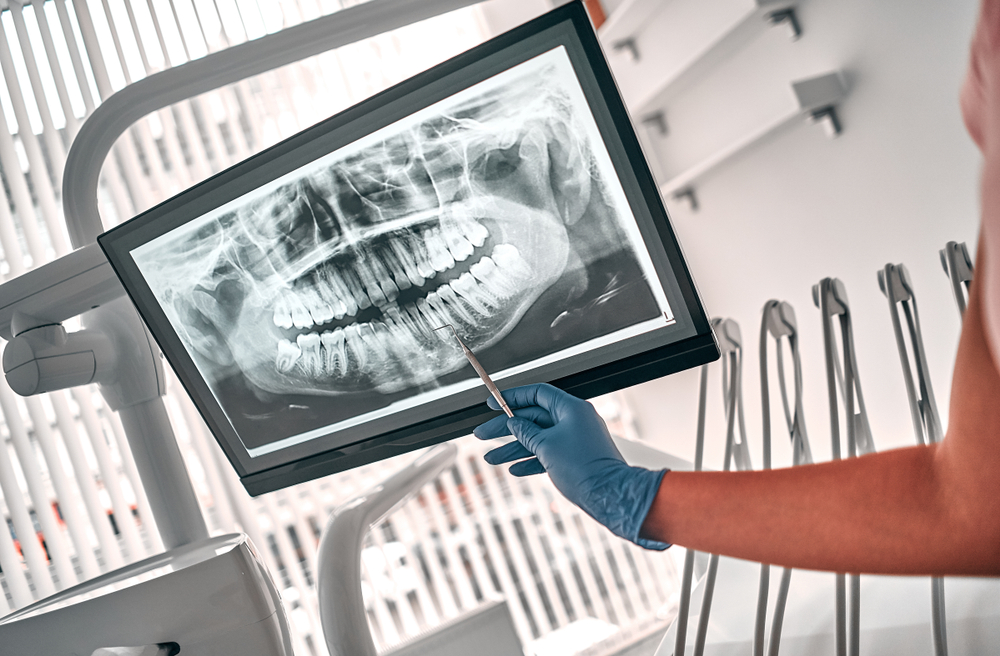
A complete full-arch implant quote should cover every step from planning to your final teeth: the consultation and 3D scan, any extractions, the implant surgery, sedation, the temporary teeth you wear while healing, the final arch and the follow-up visits. If a quote leaves any of these out, the headline number is not the real total.
Why two full-arch quotes are hard to compare
Replacing a whole upper or lower arch of teeth on implants is not one procedure. It is a sequence: planning, removing any failing teeth, placing the implants, fitting a temporary set of teeth, waiting for the implants to heal into the bone, and then making and fitting the final teeth. Some offices quote the whole sequence as one fee. Others quote only the surgery, or only the implants and the final teeth, and bill the rest separately as it comes up.
That is why one quote can look thousands of dollars cheaper than another and still end up costing more. The fair comparison is always the total cost to go from the teeth you have today to the final arch you will live with, for one arch or both.
In Virginia, the Board of Dentistry’s advertising rule (18VAC60-21-80) treats an advertised fee as misleading if it leaves out related procedures that are likely to be needed to complete the service. That rule covers advertising, not every private quote, but it is a good standard to hold any quote to. You can see how we apply it in what’s included in our full-mouth implant fee.
The line items a complete quote should cover
Use this list as a checklist when you read any full-arch treatment plan, ours included:
- Consultation, exam and records. X-rays, photos and digital impressions or scans of your mouth.
- A cone beam CT (CBCT) scan. This 3D scan shows the height, width and density of your jawbone and where the nerves and sinuses sit. Full-arch planning depends on it.
- Extractions. Many full-arch patients still have some teeth that need to come out. Ask whether every extraction is included, and whether that includes surgical extractions.
- Bone grafting or bone reshaping. Some patients need bone added; others need the ridge smoothed so the new arch fits. See dental implants with bone loss for why this varies.
- The implants themselves. How many per arch, and the components that connect them to the teeth (abutments, often called multi-unit abutments in full-arch work).
- Sedation. Whether the fee includes it, and which kind. Our sedation dentistry page explains the options.
- Temporary teeth. The fixed or removable teeth you wear for the months the implants are healing.
- The final arch. What it is made of, who makes it, and how many try-in appointments are included before it is finished.
- Follow-up visits. Post-surgery checks, adjustments to the temporary teeth and the visits needed to fit the final arch.
Costs that are often left out
These are the items that most often appear later as separate charges. None of them is unusual or unfair in itself; the problem is only when you did not know about them when you compared prices.
- The temporary teeth, quoted as a separate appliance.
- The material upgrade. A quote may be based on acrylic teeth, with zirconia priced as an extra. Our article on zirconia vs acrylic full-arch teeth explains the difference.
- Grafting, listed as “if needed” with no price attached.
- IV sedation or an anesthesia provider, billed by a separate person or practice.
- Referrals. If the surgery and the teeth are done in two different offices, each one may quote only its own part.
- Night guards and maintenance visits after the final arch is fitted.
Questions to ask before you sign
Bring these to every consultation and ask for the answers in writing:
- Is this the total for one arch, or for both?
- What is my final arch made of, and is that material included in this price?
- Which dental lab makes the teeth, and where?
- Is anything listed as “if needed”? What would it cost if it is needed?
- Who places the implants, and who makes and fits the teeth? Is it the same office?
- What happens, and what does it cost, if a temporary tooth breaks while I am healing?
- What warranty or remake policy covers the implants and the final arch, and what does it require from me?
- How long is this quote valid?
Red flags in a full-arch quote
Most offices quote honestly, but a few patterns deserve a second look before you commit:
- A price with no treatment plan. A firm full-arch price before anyone has examined you or seen a 3D scan can only be an estimate.
- “Starting at” pricing with no list of what moves the price up.
- Pressure to sign the same day, without time to read the plan or get a second opinion.
- No mention of the final material, or of who makes the final teeth.
- Vague answers about aftercare, such as who adjusts the temporary teeth and what happens if a tooth breaks.
A good quote is specific. It names the number of implants, the materials, the stages, the visits and what is and is not included, and it holds up when you ask questions about it. Your overall health matters to the plan too; our article on who is a candidate for dental implants explains what we look at.
Warranties and remakes
Policies differ widely, so read the details rather than the headline. Some cover the implant only, not the teeth on top of it. Many require regular maintenance visits, a night guard if you grind, or not smoking, and become void if those conditions are not met. Ask what is covered, for how long and what you would pay if something needs to be repaired or remade.
It also helps to understand why repairs happen at all. In clinical studies of full-arch prostheses, wear or fracture of the artificial teeth is one of the more common problems, more common than failure of the implants themselves. That is normal maintenance for this kind of treatment, and a good quote tells you how it is handled.
How a quote works at Shield Dental Care
At Shield Dental Care in Burke, VA, Dr. Pejman Ghorbani, a general dentist, plans full-arch treatment from digital impressions, intraoral photos and a cone beam CT scan, and places the implants in our office. Our current full-arch fee is a single all-inclusive price per arch covering the implants, the surgery, the temporary teeth and the final zirconia teeth. You can read our current full-arch pricing, including exactly what it covers and how long it applies.
Whatever you decide, and wherever you go, ask for the whole plan in writing. For more on what to expect at that first visit, see our article on the dental implant consultation. To start, call (703) 250-5072 or request an appointment.
Frequently Asked Questions
Frequently Asked Questions
Frequently Asked Questions
Frequently Asked Questions
What should a full-arch implant quote include?+
The consultation and CBCT scan, any extractions, the implants and abutments, the surgery and sedation, the temporary teeth, the final arch and the follow-up visits. Anything left out should be listed with its own price.
Why is one full-arch quote so much cheaper than another?+
Often because it covers less. A lower quote may leave out the temporary teeth, extractions, sedation or the final material. Compare the total cost of finishing treatment, not the first number you see.
Is a quote for one arch or both?+
Full-arch fees are usually quoted per arch, meaning the upper or the lower jaw. If you need both, ask for the total for both. Our article on one arch or both
Does a full-arch quote include a warranty?+
It depends on the office. Ask what is covered (the implants, the teeth or both), for how long and what conditions apply, such as maintenance visits or wearing a night guard.
Can my quote change after the CT scan?+
A quote given before the scan is an estimate. The CBCT scan shows your bone, which can change the plan. A firm quote should come after the scan, in writing.
Cavities develop gradually, not overnight. Bacteria in your mouth feed on sugars and starches, producing acids that pull minerals from your enamel. Saliva repairs some damage, but frequent acid attacks overwhelm it, and plaque lets bacteria attack the tooth directly. Left unchecked, decay progresses from the enamel into the dentin, pulp, and eventually an abscess. Good hygiene, diet, and regular dental visits keep cavities preventable.