
For most people, a full arch of implant teeth takes several months from the first visit to the final teeth. Planning takes a few weeks. Surgery and a fixed set of temporary teeth usually happen on the same day. The jaw then heals for several months before the permanent teeth are made and fitted.
That is the short version. The rest of this article walks through each stage of a full-arch treatment at Shield Dental Care in Burke, VA, what happens at each appointment, and the things that can make the process longer. If you are comparing replacing one or two teeth instead, our article on dental implant procedure steps covers single implants, which follow a different rhythm.
Stage 1: Consultation and 3D planning
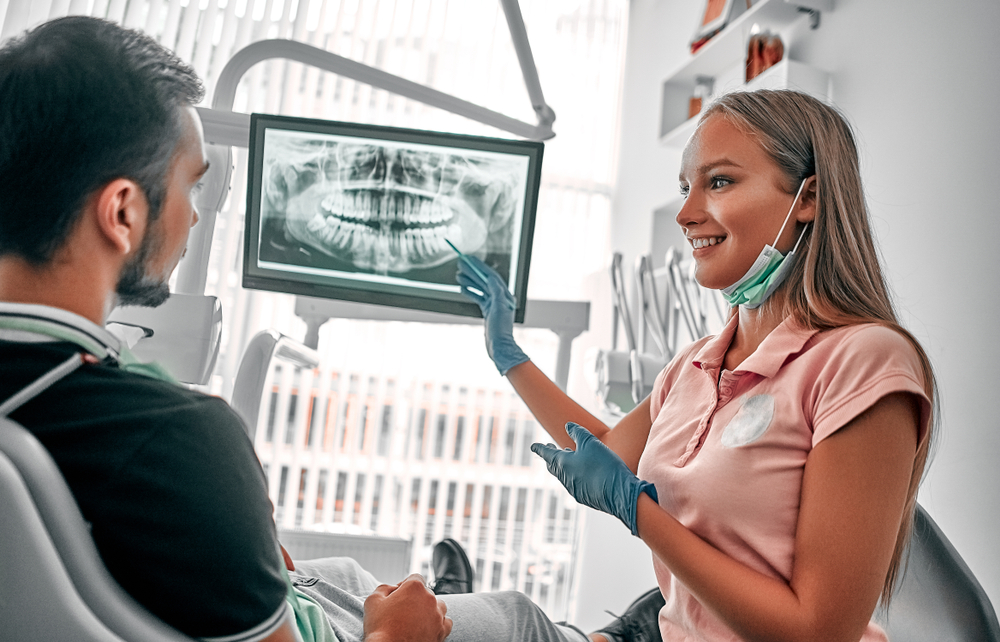
The process starts with a consultation and a set of records. At Shield Dental Care that means a Cone Beam CT (CBCT) scan, digital impressions and intraoral photographs. The CBCT shows the height, width and density of your jawbone in three dimensions, and where the nerves and sinuses sit. That information decides where the implants can safely go and whether the plan needs extra steps.
Dr. Ghorbani uses these records to plan the number and position of the implants and to talk through the shape, color, size and fit of your new teeth. The records then go to the dental lab, which prepares for your surgery before the day itself. Expect a few weeks between the consultation and surgery, depending on the lab, your health history and your own schedule.
This is also the point to ask what is and is not included in the price. Our article on what a full-arch implant quote should include lists the questions worth asking.
Stage 2: Surgery day
On the day of surgery, any remaining teeth that cannot be saved are removed, the implants are placed and, in most cases, a fixed temporary set of teeth is attached before you go home. Sedation is available if you would prefer it; our article on sedation for implant surgery explains the options.
In the All-on-4 approach, the two back implants are usually tilted. A 2017 consensus statement from an implant conference recommended angling those back implants between 30 and 45 degrees, depending on the anatomy. Tilting them lets longer implants reach better bone while staying clear of the sinus in the upper jaw and the nerve in the lower jaw, which is one reason the method can avoid bone grafting for some people.
Attaching teeth on the day of surgery is called immediate loading. The same consensus statement put the window for it at the first 24 hours up to one week after surgery, and only when the implants are held firmly enough in the bone at placement. If they are not, the safer plan is to let them heal before teeth are attached, and you wear a healing denture in the meantime.
Stage 3: Healing with your temporary teeth
The months after surgery are when the implants fuse with the jawbone. According to Cleveland Clinic, healing after implant placement takes between three and six months on average, and it can take longer, particularly after bone grafting.
During this stage you wear the temporary teeth every day. They look like teeth and let you smile and speak normally, but they are made to protect the healing implants, not to chew everything. You will be asked to stick to softer foods while the bone heals. Our article on living with temporary full-arch teeth covers what they are made of, how to clean them and what to avoid.
Expect a few short check-up visits during healing. These are to check the gums, the bite and the temporary teeth, and to catch anything that needs attention early.
Stage 4: Final impressions and try-in
Once the implants have healed, new impressions are taken of the implants, the gums and your bite. The gums change shape as they heal after extractions, so the final teeth are designed for your mouth as it is now rather than as it was on surgery day.
Many cases include a try-in, where you see and test the set-up of the new teeth before they are finished. This is the time to speak up about the length of the teeth, their shade, the fullness of your lips and how they feel when you speak. It is much easier to change at this point than after the final teeth are made.
Stage 5: Final teeth
The last appointment swaps the temporary teeth for the permanent ones. At Shield Dental Care the final full-arch teeth are made from porcelain zirconia, which is stronger and more stain-resistant than the acrylic used for the temporaries. Our article comparing zirconia and acrylic full-arch teeth explains the difference.
The final teeth are screwed to the implants, so you do not take them out at home. Your dentist can remove them for maintenance.
A typical timeline at a glance
- Consultation and planning: CBCT scan, digital impressions and treatment plan, usually a few weeks before surgery.
- Surgery day: extractions if needed, implants placed and, in most cases, temporary teeth attached.
- Healing: three to six months on average, sometimes longer, with short check-ups along the way.
- Final impressions and try-in: one or two visits once healing is confirmed.
- Final teeth: the permanent zirconia teeth replace the temporaries.
These are typical ranges, not a promise. Your own timeline is set at your consultation, after the scan.
What can make it take longer
- Bone loss. If there is not enough bone in the right places, bone grafting or a different implant plan may be needed, and grafts add their own healing time. See dental implants with bone loss.
- Gum disease or infection. Active infection is usually treated before implants are placed.
- Health conditions and smoking. Uncontrolled diabetes, some medications and smoking can slow healing and raise the risk of complications.
- Implants that are not stable enough on the day. If teeth cannot be attached straight away, the implants heal first under a healing denture.
- Treating both arches. Upper and lower arches can be treated together or one after the other. Our article on treating one arch or both covers the trade-offs.
How many appointments to expect
The exact number varies, but most full-arch treatments involve a consultation and records visit, the surgery, a handful of short healing check-ups, one or two visits for final impressions and try-in, and the appointment to fit the final teeth. After that come regular maintenance visits, just as with natural teeth.
Planning your own timeline
If you are in Burke, Fairfax, Springfield or nearby, the first step is a consultation with a CBCT scan. You will leave knowing whether you are a candidate, how many implants your plan needs, whether you need grafting, and what your own timeline looks like. For what the treatment includes and what it costs, see our full mouth dental implants page, or read more about the All-on-4 treatment itself.
When you are ready to plan, book a full-arch implant consultation or call (703) 250-5072.
Frequently Asked Questions
Frequently Asked Questions
Frequently Asked Questions
Frequently Asked Questions
How long do full mouth dental implants take from start to finish?+
Usually several months. Planning takes a few weeks, surgery and temporary teeth often happen on the same day, and healing averages three to six months before the final teeth are fitted. Bone grafting or other preparatory work can make it longer.
Will I leave surgery with teeth?+
In most cases, yes. When the implants are stable enough at placement, a fixed temporary set of teeth is attached on the day of surgery. If they are not, the implants heal first and you wear a healing denture in the meantime.
Why do I need temporary teeth before the final ones?+
The implants need time to fuse with the bone, and the gums change shape after extractions. The temporaries protect the implants while that happens, and the final teeth are then made to fit your healed mouth.
Does bone grafting change the timeline?+
It can. Grafts need to heal too, which can add months. Tilted implants, as in All-on-4, sometimes avoid the need for grafting, but whether they do in your case depends on the CBCT scan.
Can I have both arches done at the same time?+
Often, yes, though it depends on your health and your bone. We discuss doing both together or one at a time at your consultation.
Cavities develop gradually, not overnight. Bacteria in your mouth feed on sugars and starches, producing acids that pull minerals from your enamel. Saliva repairs some damage, but frequent acid attacks overwhelm it, and plaque lets bacteria attack the tooth directly. Left unchecked, decay progresses from the enamel into the dentin, pulp, and eventually an abscess. Good hygiene, diet, and regular dental visits keep cavities preventable.