
- What Full-Arch Restoration Actually Means
- How All-on-4 Works
- How Traditional Implant Methods Differ
- Comparing Candidacy, Timeline, and Cost
- Maintenance, Feel, and Function
What Full-Arch Restoration Actually Means
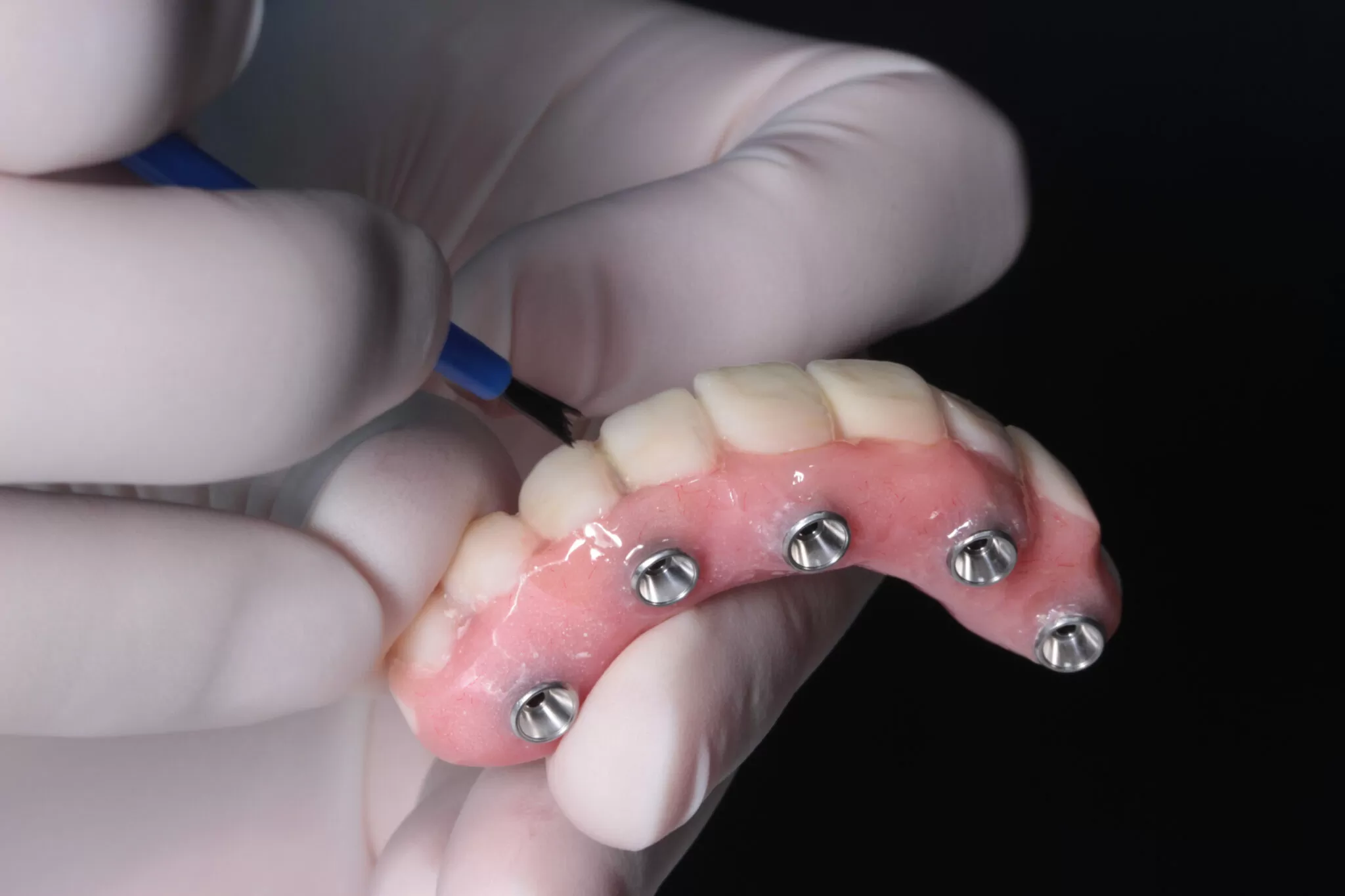
If you are missing most or all of your teeth on the top or bottom, replacing them one at a time is not the only path forward. Full-arch restoration rebuilds an entire row of teeth at once, anchoring a fixed bridge to dental implants set into the jawbone. Unlike a removable denture that rests on your gums, an implant-supported arch is held in place by titanium posts that fuse with the bone over time, so the new teeth stay put when you talk, laugh, and chew.
Two of the most common approaches to full-arch work are All-on-4 and traditional multi-implant restoration. Both can give you a stable, natural-looking set of teeth, and both are worlds apart from a plate that slips at dinner. The difference lies in how many implants are used, where they are placed, and how long the whole process takes. For many patients in Burke and the surrounding Fairfax County area, understanding that distinction is the first step toward choosing wisely.
At Shield Dental Care, Dr. Pejman Ghorbani walks each patient through the trade-offs rather than pushing a single option. The right choice depends far more on your jaw, your health, and your goals than on any one-size-fits-all rule.
How All-on-4 Works
The All-on-4 method uses just four implants to support a full arch of replacement teeth. What makes it clever is the placement: the two rear implants are angled, often around 30 to 45 degrees, so they anchor into denser bone toward the front of the jaw while avoiding areas where bone tends to be thinner or where nerves and sinuses sit. This strategic tilting lets the four posts distribute chewing forces across the whole arch without needing extra implants along the back.
Because those angled implants tap into stronger bone, many patients can receive a temporary set of fixed teeth the same day as surgery, an approach often called immediate or same-day teeth. You leave the office with a full smile rather than going toothless while you heal. After several months of healing, that temporary bridge is replaced with a final, custom-crafted prosthesis. You can learn more about the process on our page for All-on-4 dental implants in Burke, VA.
- Typically four implants per arch, with the back two angled for stability
- Often allows a fixed temporary bridge on the day of surgery
- Can frequently avoid or reduce the need for bone grafting
- Fewer surgical sites, which can mean a smoother recovery for some patients
How Traditional Implant Methods Differ
Traditional full-arch restoration takes a more distributed approach, often placing six to eight implants per arch spread evenly along the jaw. With more posts sharing the load, this method can feel especially solid and may be recommended for patients who have strong bone throughout the arch or who want maximum support in the back molars where heavy grinding happens.
The trade-off is time and, sometimes, added procedures. Traditional implants are usually placed vertically into the bone, which means areas with insufficient bone height may first need grafting to build up a foundation. Grafts add healing months before implants can even go in. From there, the implants themselves need time to integrate with the bone, so the final teeth may not be attached until healing is well underway. The overall journey can stretch across many months, though the result is a robust, long-proven restoration. A single missing tooth, by contrast, is often handled with a standard dental implant in Burke, VA rather than a full-arch system.
Comparing Candidacy, Timeline, and Cost
Candidacy often comes down to bone density. All-on-4 was designed in part to help patients who have experienced bone loss, since its angled implants make the most of the bone that remains and frequently sidestep grafting. Traditional multi-implant restoration tends to suit patients with fuller, healthier bone volume who can support more posts placed straight into the jaw. A cone-beam scan at our Burke office helps Dr. Ghorbani see exactly what you are working with.
Timelines diverge meaningfully. All-on-4 often delivers same-day temporary teeth and a shorter overall path to your final smile. Traditional methods, especially when grafting is involved, generally require more visits and a longer healing runway. Neither timeline is inherently better; it is about matching the plan to your anatomy and your patience for the process.
On cost, fewer implants can make All-on-4 more affordable up front than a six-to-eight-implant traditional arch, though pricing always depends on materials, any preparatory work, and your specific case. It is worth weighing implants against removable options too. If you are still comparing the categories, our guide on dental implants vs. dentures lays out the bigger picture, and we also offer conventional dental dentures in Burke, VA for those who prefer them.
| Factor | All-on-4 | Traditional Full-Arch Implants |
|---|---|---|
| Implants per arch | Four, with the rear pair angled | Typically more, placed vertically |
| Bone grafting | Angled placement often works with existing bone | More likely to be needed where bone volume is low |
| Timeline | A temporary arch is often fitted the same day | Staged over a longer period before the final restoration |
| Restoration | One full arch supported by the four implants | Can support a fixed bridge or separate sections |
| Repairs and adjustments | The arch is generally addressed as a whole | Sections can sometimes be handled independently |
| Best suited to | Patients wanting fewer surgical stages and faster results | Patients with sufficient bone seeking wider load distribution |
Maintenance, Feel, and Function
Day to day, both fixed full-arch options feel dramatically more secure than a removable denture. You brush and clean around them much like natural teeth, though the fixed bridge design means you will also use tools such as a water flosser or special brushes to keep the area beneath the arch clean. Because more implants distribute force across a wider footprint, some patients with traditional restorations report an especially sturdy bite in the back of the mouth, while All-on-4 patients often praise how quickly they got back to eating and smiling.
Both approaches ask for the same long-term commitment: consistent home care and regular checkups. Implants do not get cavities, but the gums and bone supporting them still need attention to stay healthy for the long haul. Regular visits let us monitor the fit of your prosthesis and the health of the tissue around each implant.
- All-on-4 often means fewer implants to clean around and a faster return to function
- Traditional restorations may offer extra rear-molar support for heavy chewers
- Both require daily cleaning under the bridge plus routine professional care
- Neither can develop decay, but healthy gums remain essential
Which Option Might Suit You
There is no universal winner. All-on-4 tends to appeal to patients who want a faster, often more budget-friendly path, who have some bone loss, or who would rather avoid grafting when possible. Traditional multi-implant restoration can be the better fit for those with ample healthy bone who prioritize maximum support and do not mind a longer timeline. Overall health, smoking history, bite habits, and personal preference all factor in as well.
The only way to know which approach truly fits your mouth is a hands-on evaluation with imaging. Serving Burke, Fairfax, Springfield, Annandale, and Lorton, our team is happy to talk through the options honestly, with no pressure to choose one over the other. When you are ready to explore what full-arch restoration could look like for you, you can contact us to schedule a consultation.
Frequently Asked Questions
Can I really get teeth the same day with All-on-4?+
In many cases, yes. Because the four implants tap into denser bone, a fixed temporary bridge can often be attached the same day as surgery, so you leave with a full smile. The permanent prosthesis is placed later once the implants have healed. Same-day teeth depend on your individual case, which Dr. Ghorbani confirms after imaging.
Is All-on-4 stronger or weaker than using six to eight implants?+
Both are engineered to handle normal chewing. All-on-4 distributes force across four strategically angled implants, while traditional methods spread the load over more posts, which some heavy chewers prefer for rear-molar support. Strength depends more on proper planning and your bone quality than on implant count alone.
What if I have significant bone loss?+
Bone loss does not automatically rule out implants. All-on-4 was designed partly to help such patients by angling implants into remaining dense bone, often avoiding grafts. Traditional implants may still be possible with bone grafting first. A cone-beam scan at our Burke office lets us map your bone and recommend a realistic plan.
How do I care for a full-arch implant restoration?+
You brush daily and clean beneath the fixed bridge using a water flosser or interdental brushes, then keep up with routine checkups. Implants cannot get cavities, but the surrounding gums and bone need ongoing care to stay healthy. Regular visits also let us check the fit and comfort of your restoration over time.
Both methods anchor a fixed full arch of teeth, so the choice is a trade-off. All-on-4 uses four implants, often angled to work with existing bone, avoiding grafts and frequently allowing same-day temporary teeth on a faster, often more affordable path. Traditional restorations place more implants for wider load distribution and rear-molar support, suiting patients with healthier bone who accept a longer timeline.