
- What Are Porcelain Veneers
- What Are Composite Veneers
- Side-by-Side Comparison
- When Porcelain Veneers Are the Better Choice
- When Composite Veneers Make More Sense
You’ve decided veneers are the right move for your smile — now comes the next question: porcelain or composite?
Both types can dramatically improve the appearance of your teeth, but they differ in cost, durability, application process, and long-term maintenance. Choosing the right option depends on your specific goals, timeline, and budget.
At Shield Dental Care in Burke, VA, Dr. Ghorbani works with both materials and can help you decide which type will deliver the best result for your unique situation. Here’s an honest breakdown.
What Are Porcelain Veneers?
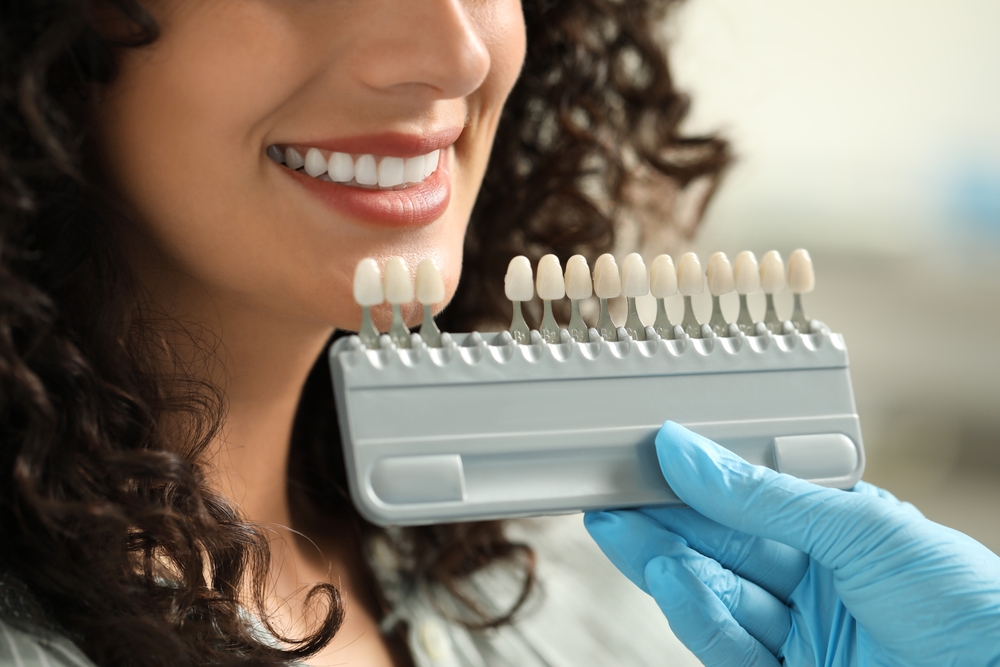
Porcelain veneers are ultra-thin ceramic shells custom-crafted in a dental lab. They’re bonded to the front surface of your teeth to transform their color, shape, size, and alignment.
Key characteristics: – Custom-fabricated by a ceramicist for an exact fit – Made from medical-grade dental ceramic – Require two visits — one for preparation and impressions, one for bonding – Extremely stain-resistant (porcelain resists staining like natural enamel) – Lifespan of 10–15+ years with proper care
What Are Composite Veneers?
Composite veneers use the same tooth-colored resin material as dental bonding. Instead of being fabricated in a lab, composite veneers are sculpted directly onto your teeth by hand during a single appointment.
Key characteristics: – Applied and shaped chairside by Dr. Ghorbani – Made from composite resin (the same material used in tooth-colored fillings) – Completed in a single visit — no lab wait time – More susceptible to staining than porcelain – Lifespan of 5–7 years before touch-ups are needed
Side-by-Side Comparison
| Factor | Porcelain Veneers | Composite Veneers |
|---|---|---|
| Material | Ultra-thin, medical-grade dental ceramic shells | Tooth-colored composite resin, same as fillings |
| How it's made | Custom-crafted in a dental lab by a ceramicist | Sculpted directly onto teeth by hand, chairside |
| Procedure / visits | Two visits — preparation and impressions, then bonding | Single visit, no lab wait time |
| Stain resistance | Extremely stain-resistant, like natural enamel | More susceptible to staining than porcelain |
| Longevity | 10–15+ years with proper care | 5–7 years before touch-ups or replacement |
| Best suited for | Complete smile transformation, 4–10+ teeth | Fixing one or two teeth with minor imperfections |
| Reversibility | Requires more tooth preparation | Reversible; little to no tooth reshaping |
When Porcelain Veneers Are the Better Choice
Porcelain veneers are typically the best option when:
- You want a complete smile transformation involving 4–10+ teeth
- You need to correct multiple issues at once — color, shape, alignment, and size
- You want maximum stain resistance (important for coffee and wine lovers)
- You’re looking for the longest-lasting result with minimal maintenance
- You want the most natural-looking translucency that mimics real enamel
When Composite Veneers Make More Sense
Composite veneers may be the smarter choice when:
- You want to fix one or two teeth with minor imperfections
- You need results today — no waiting for lab fabrication
- You’re on a tighter budget and want to improve your smile now
- You’re a younger patient whose teeth are still changing (composites are less invasive)
- You want a reversible option — composites require little to no tooth reshaping
Can You Mix Both Types?
In some cases, yes. A smile makeover might use porcelain veneers on your most visible teeth (upper front 6–8) and composite bonding on less prominent teeth to balance cost and aesthetics. Dr. Ghorbani can design a hybrid plan during your consultation.
What About Longevity and Maintenance?
Porcelain veneers require the same care as natural teeth — regular brushing, flossing, and professional cleanings. Avoid using your teeth as tools and wear a night guard if you grind. With basic care, they’ll last well over a decade.
Composite veneers need a bit more attention. They can stain from coffee, tea, and red wine over time, so regular cleanings are especially important. They may need polishing or touch-ups every few years, and eventual replacement after 5–7 years.
The Bottom Line
There’s no universal “better” option — it depends on your goals:
- Want the best possible result that lasts the longest? → Porcelain
- Need a quick, affordable improvement? → Composite
- Not sure? → Book a consultation and Dr. Ghorbani will show you realistic options for both
Schedule Your Veneers Consultation
Not sure which type is right? Dr. Ghorbani can show you what each option would look like on your teeth during a no-obligation consultation.
📞 Call: (703) 978-5288 | 📅 Book Online
Top Rated Dentist in Burke VA
At Shield Dental Care, we take pride in being a top-rated Dentist in Burke, VA. We are dedicated to enhancing your charming smile. Our philosophy revolves around your smile being a beautiful reflection of your persona, a unique signature that merits the finest attention.
Tour Our Burke Dental Office
Experience the best of dental technology and service at Shield Dental Care. Situated conveniently at 6505 Sydenstricker Rd B, Burke, VA 22015,
Related Blogs
- What to Expect at Your Cosmetic Dentistry Consultation
- 5 Signs You Should See a Cosmetic Dentist
- How Much Does a Smile Makeover Cost? A Complete Guide
Neither veneer type is universally better; the right choice depends on your goals, timeline, and budget. Porcelain suits a complete smile transformation, offering the longest-lasting, most stain-resistant, natural-looking result across several teeth, though it requires two visits and more tooth preparation. Composite makes more sense for fixing one or two teeth on a tighter budget, delivering a reversible, less invasive improvement in a single visit.