
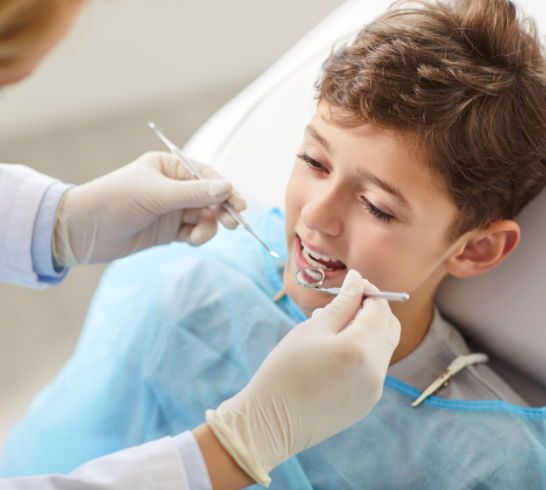
Many parents are surprised to hear how early the first dental visit is supposed to happen. It is not when the child can sit still, or when all the baby teeth are in, or before kindergarten. It is around the first birthday. This guide explains why, what actually happens at a visit that young, and how to make the morning go smoothly for you and your toddler.
When to book it
The American Academy of Pediatric Dentistry recommends the first exam when the first tooth comes in and no later than 12 months of age. The ADA gives parents the same window: any time after the first teeth appear, but by the first birthday. Since the first tooth usually arrives around six months, there is a six-month stretch in which to book.
If your child is already past one and has never been seen, do not worry about being "late." Book now. The same goes for a two- or three-year-old: the first visit is useful at any age, and the sooner it happens the more likely it is to be a simple, pleasant one.
Why so early?
Baby teeth can decay soon after they appear, especially when a child falls asleep with a bottle or sips milk or juice through the night. Early decay often starts as chalky white lines near the gumline that parents do not notice. Catching it at that stage means it can often be managed with home changes and fluoride rather than fillings. An early visit also gives your child a "dental home," a familiar office to call when something goes wrong, such as a fall that chips a front tooth.
Just as important, the first visit is for you. Much of it is a conversation about the habits that shape the next few years, and it is far easier to adjust a bedtime bottle routine at 12 months than at three years.
What happens during a first visit
A first visit for a baby or young toddler is short, and nothing is done that requires numbing. While every office has its own approach, the visit usually covers:
- Health history. Pregnancy and birth details, medical conditions, medicines, allergies and how the child is fed.
- A quick look in the mouth. For very young children this is often done "knee to knee": you sit facing the dentist, your child lies back with their head in the dentist's lap and their body in yours. It feels secure for the child and lets you see everything.
- Checking teeth, gums and bite. The dentist looks for early decay, counts the teeth that have come in, and checks the gums, tongue and the way the jaws are developing.
- A gentle cleaning and fluoride, if appropriate. Depending on age and risk, the teeth may be wiped clean and a thin fluoride varnish painted on.
- Coaching for parents. How to brush a toddler's teeth, how much toothpaste to use, teething, pacifiers and thumb-sucking, and childproofing to avoid mouth injuries.
Crying is completely normal and does not mean the visit went badly. A crying toddler actually has their mouth wide open, which makes the exam quicker.
How to prepare your toddler
- Pick the right time of day. Book after a nap or early in the morning, not at the edge of a meltdown. Weekday mornings tend to be calmer than late afternoons.
- Keep the language positive and simple. "The dentist is going to count your teeth" works. Avoid words like hurt, shot or drill, and do not promise that nothing will happen; simply describe it.
- Practice at home. Lie your child back on your lap and count their teeth with a toothbrush, or let them "check" a stuffed animal's teeth.
- Bring a comfort item. A favorite toy or blanket helps.
- Stay calm yourself. Young children read their parents. If you are anxious about dentists, a partner or grandparent may be the better companion for the first visit.
What to bring and what to ask
Bring your child's insurance card, a list of any medicines, and the name of your pediatrician. It also helps to know your water source. Most Springfield homes drink fluoridated tap water from Fairfax Water, but a home that uses reverse osmosis, bottled water or a private well gets far less fluoride, and that changes the advice. Our article on whether Springfield tap water is fluoridated explains how to check.
Useful questions to ask at the visit:
- Do you see any early signs of decay, and what should I change at home?
- How much toothpaste should I use at this age?
- Is the bottle, sippy cup, pacifier or thumb habit affecting the teeth?
- When should we come back, and what will the next visit include?
- What should I do if my child falls and hurts a tooth after hours?
Your pediatrician's role
Many pediatricians also check teeth and paint fluoride varnish at well-child visits, which is consistent with the U.S. Preventive Services Task Force recommendation that primary care clinicians apply fluoride varnish to baby teeth starting when they erupt. That is a welcome extra layer, not a substitute for a dental exam. A dentist can see early decay between teeth and on surfaces a quick look misses, and builds the relationship you will rely on later.
How coverage works for young children
Most family dental plans cover children's checkups and cleanings as preventive care, often with little or nothing out of pocket, but frequency limits and waiting periods differ by plan. Many Springfield federal and military households carry dental coverage through FEDVIP or the TRICARE Dental Program, and our guide to FEDVIP and TRICARE dental for Springfield families explains how those plans work. Children enrolled in Virginia Medicaid or FAMIS have dental benefits through Cardinal Care Smiles, administered by DentaQuest. Whatever your plan, call the office before the visit so the team can check your benefits.
After the first visit
The dentist will suggest how often to come back based on your child's risk; many children are seen about every six months, and some sooner. Keep brushing twice a day, and when the back teeth start touching, start flossing between them. For the daily routine by age, sealants and snacks, see our guide to preventing cavities in children.
Shield Dental Care sees families with children of all ages. We are a Burke practice a short drive from Springfield, with Friday and Saturday morning hours that can make a first visit easier to fit around work. Our page on dental checkups and exams for Springfield patients covers routine visits for the whole family, and the Springfield family dentist page has directions and booking.
Frequently Asked Questions
Frequently Asked Questions
Frequently Asked Questions
Frequently Asked Questions
At what age should my child first see a dentist?+
When the first tooth comes in, and no later than the first birthday. That is the shared guidance of the American Academy of Pediatric Dentistry and the American Dental Association.
How long does a baby's first dental visit take?+
Usually a short appointment. Much of the time is spent on health history and talking with you; the exam itself often takes only a few minutes.
Should I stay with my child during the exam?+
Yes. For babies and toddlers, a parent is part of the exam, often holding the child on their lap in the knee-to-knee position. Older children may sit in the chair on their own while you stay close by.
What if my toddler cries the whole time?+
That is normal and expected at this age. The visit can still be completed, and repeat visits usually get easier as the office becomes familiar.
Cavities develop gradually, not overnight. Bacteria in your mouth feed on sugars and starches, producing acids that pull minerals from your enamel. Saliva repairs some damage, but frequent acid attacks overwhelm it, and plaque lets bacteria attack the tooth directly. Left unchecked, decay progresses from the enamel into the dentin, pulp, and eventually an abscess. Good hygiene, diet, and regular dental visits keep cavities preventable.