
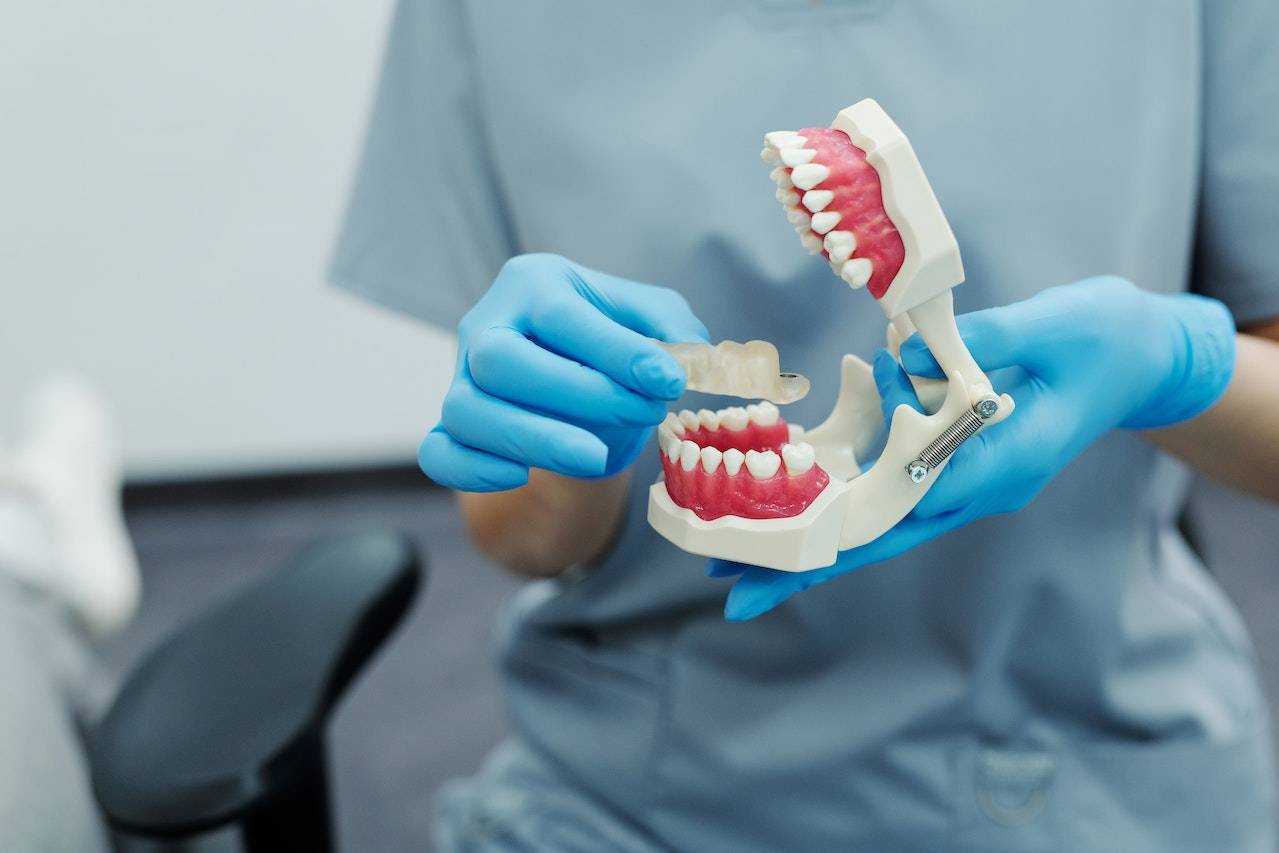
Teeth move throughout life, which is both why adult treatment works and why so many people find their teeth less straight at forty than at twenty. The biology does not stop; it just slows.
What is actually different
Bone remodels more slowly in an adult than in a growing teenager, so the same movement generally takes longer. Growth also cannot be used: in a child, a jaw discrepancy can sometimes be guided as the face develops, and in an adult the teeth are moved within the jaws you already have.
What is not different is the outcome. Teeth move at any age provided the bone and gums supporting them are healthy.
Gum health comes first
This is the single biggest difference in practice. Moving teeth through bone that is already being lost to periodontal disease makes the loss worse. Active gum disease is treated and stabilised before orthodontics begins, not alongside it.
Adults are also more likely to arrive with crowns, bridges, implants and old fillings. Each affects the plan — an implant, in particular, does not move, because it is fused to bone rather than held in a ligament.
Why adults treat
Appearance is the common reason, and a perfectly good one. But crowded teeth are harder to clean and collect plaque where a brush cannot reach, and an uneven bite loads some teeth far harder than others. Both are functional arguments that hold independently of how it looks.
Relapse
A large share of adult cases are people who had braces as teenagers and stopped wearing retainers. That is worth saying without judgement, because the lesson applies to this round too: retention is permanent, not a phase at the end.
Frequently Asked Questions
Frequently Asked Questions
Frequently Asked Questions
Frequently Asked Questions
Am I too old for orthodontic treatment?+
No. Teeth can be moved at any age as long as the supporting bone and gums are healthy. Treatment usually takes longer than it would in a teenager because bone remodels more slowly, but the outcome is not age-limited.
Can I have braces if I have had gum disease?+
Often yes, but it must be treated and stable first. Moving teeth through bone that is actively being lost accelerates the loss, so gum health is addressed before orthodontics starts.
Do implants move with braces?+
No. An implant is fused directly to bone rather than held in a ligament, so it cannot be moved orthodontically. Existing implants are worked around in the plan, which is one reason adult cases need careful assessment first.
Cavities develop gradually, not overnight. Bacteria in your mouth feed on sugars and starches, producing acids that pull minerals from your enamel. Saliva repairs some damage, but frequent acid attacks overwhelm it, and plaque lets bacteria attack the tooth directly. Left unchecked, decay progresses from the enamel into the dentin, pulp, and eventually an abscess. Good hygiene, diet, and regular dental visits keep cavities preventable.