
- When Do Kids Need Dental Sedation
- Sedation Options for Children
- Is Dental Sedation Safe for Children
- How to Prepare Your Child
- What to Expect After the Appointment
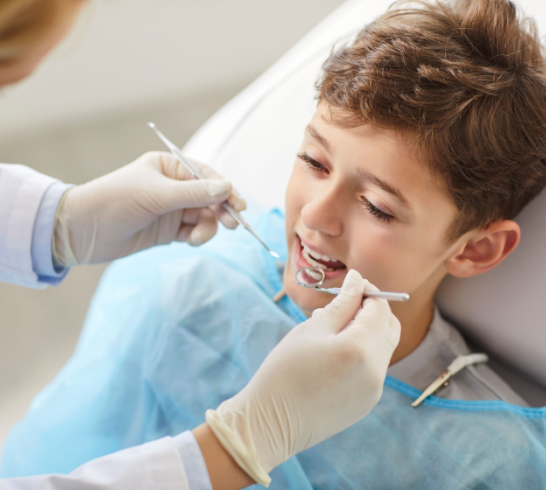
When your child needs dental treatment but is too anxious, too young, or too fidgety to sit through a procedure, sedation dentistry can make all the difference. It helps them receive necessary care safely while building a foundation for a positive relationship with dental visits.
At Shield Dental Care in Burke, VA, Dr. Ghorbani provides sedation options for pediatric patients with careful attention to safety, dosing, and your child’s individual needs.
When Do Kids Need Dental Sedation?
Not every child who visits the dentist needs sedation. But it becomes a valuable tool when a child:
- Has significant dental anxiety or fear that prevents cooperation
- Needs extensive treatment — multiple fillings, crowns, or extractions in one visit
- Is very young (under 5) and unable to sit still for the duration of treatment
- Has a strong gag reflex that interferes with dental work
- Has special needs that make traditional dental visits challenging
- Had a negative dental experience that created lasting fear
Sedation isn’t about forcing treatment on an unwilling child. It’s about providing care they genuinely need in a way that’s safe and minimally traumatic.
Sedation Options for Children
Nitrous Oxide (Laughing Gas) — Most Common for Kids
Nitrous oxide is the most frequently used pediatric sedation method for good reasons:
- Gentle and fast-acting — effects begin within 2–3 minutes
- Easily adjustable — we can increase or decrease the level in real time
- Wears off immediately — your child will feel normal within 5–10 minutes
- No needles — administered through a small nasal mask
- No fasting required — just a light meal 2 hours before
Most children respond well to nitrous oxide for routine procedures like fillings, dental sealants, and cleanings.
Oral Sedation — For Stronger Anxiety
For children with more significant anxiety or those needing longer procedures, a prescribed oral medication provides deeper relaxation:
- Administered as a liquid or dissolvable tablet before the appointment
- Child remains conscious but very drowsy and calm
- May not remember the procedure afterward
- Requires fasting (6–8 hours before, per Dr. Ghorbani’s instructions)
- Child will need the rest of the day to recover
- Parent must be present to transport and monitor afterward
IV Sedation — For Complex Cases
Reserved for extensive surgical procedures or children with severe anxiety/special needs who cannot cooperate with lighter sedation. IV sedation provides the deepest level of relaxation with continuous monitoring.
Is Dental Sedation Safe for Children?
This is the #1 question parents ask—and it’s the right question.
Yes, dental sedation is safe for children when administered by a properly trained provider with appropriate monitoring.
At Shield Dental Care: – Dr. Ghorbani is certified in pediatric sedation techniques – Vital signs (heart rate, oxygen levels, blood pressure) are monitored continuously – Dosing is calculated precisely based on your child’s weight, age, and medical history – Emergency protocols and equipment are always immediately available – We follow ADA and AAPD guidelines for pediatric sedation
The risks of pediatric dental sedation are very low. The risk of not treating dental problems—infections spreading, pain worsening, permanent teeth being affected—is often much higher.
How to Prepare Your Child
What to Tell Them
- Use positive, simple language: “The dentist is going to help your teeth feel better”
- Avoid words like “needle,” “drill,” “shot,” or “hurt”
- Explain that they’ll breathe through a “special nose mask” (for nitrous) or “take medicine that helps them feel sleepy” (for oral sedation)
- Reassure them that you’ll be there when they wake up
Day-of Preparation
- Follow fasting instructions exactly (if applicable)
- Dress them in comfortable, loose clothing
- Bring a favorite stuffed animal or comfort item
- Arrive 10–15 minutes early so they can settle in
- Stay calm yourself — children pick up on parental anxiety
What to Expect After the Appointment
After nitrous oxide: Your child will feel normal almost immediately. They can eat, play, and go to school.
After oral sedation: Your child will be drowsy for 4–6 hours. Keep them resting, offer soft foods and water, and supervise them closely (coordination may be affected). They’ll be back to normal by the next morning.
After IV sedation: Plan for a full day of rest at home. Monitor them closely for the first 4 hours. Normal activity can resume the next day.
Building Positive Dental Experiences
The ultimate goal of pediatric sedation isn’t just getting through today’s appointment—it’s ensuring your child doesn’t develop a lifelong fear of the dentist.
When children have comfortable, pain-free dental experiences early on, they’re far more likely to maintain regular dental care throughout their lives. Sedation helps create that positive foundation.
At Shield Dental Care, we treat your child’s experience as seriously as we treat their teeth.
Schedule your child’s appointment →
Shield Dental Care offers pediatric sedation dentistry in Burke, VA. We provide a comfortable, supportive environment for children who need extra help during dental visits.
Top Rated Dentist in Burke VA
At Shield Dental Care, we take pride in being a top-rated Dentist in Burke, VA. We are dedicated to enhancing your charming smile. Our philosophy revolves around your smile being a beautiful reflection of your persona, a unique signature that merits the finest attention.
Tour Our Burke Dental Office
Experience the best of dental technology and service at Shield Dental Care. Situated conveniently at 6505 Sydenstricker Rd B, Burke, VA 22015,
Related Blogs
- What to Expect at Your Cosmetic Dentistry Consultation
- 5 Signs You Should See a Cosmetic Dentist
- How Much Does a Smile Makeover Cost? A Complete Guide
For children who are anxious, very young, or unable to sit still, sedation dentistry allows necessary treatment while building positive dental experiences. Nitrous oxide is the most common and gentlest option, with oral sedation and IV sedation reserved for stronger anxiety or complex cases. When administered by a trained provider with proper monitoring, pediatric sedation is safe, and untreated dental problems often pose a greater risk.