
- Losing One Tooth Is a Bigger Deal Than It Looks
- How Each Option Actually Works
- The Big Difference: What Happens to Your Neighboring Teeth
- Comparing the Two Side by Side
- Bone Health, Longevity, and Cost Over Time
Losing One Tooth Is a Bigger Deal Than It Looks
A single missing tooth might not seem urgent, especially if it is toward the back and does not show when you smile. But the gap left behind rarely stays quiet. Neighboring teeth can drift into the empty space, the tooth above or below may start to over-erupt, and the jawbone underneath begins to shrink because it no longer has a root stimulating it. Over months and years, that one small gap can change your bite, your ability to chew, and even the shape of your face.
The good news is that replacing one tooth is one of the most predictable things modern dentistry does. At Shield Dental Care in Burke, VA, patients most often weigh two proven options: a single tooth dental implant or a traditional dental bridge. Both restore your smile and your ability to eat comfortably, but they work in very different ways. Dr. Pejman Ghorbani, DDS, walks each patient through the trade-offs so the choice fits their health, budget, and long-term goals rather than a one-size-fits-all answer.
How Each Option Actually Works
A single tooth implant replaces the tooth from the root up. A small titanium post is placed into the jawbone where the natural root used to be. Over a few months, the bone fuses to the post in a process called osseointegration, creating a stable foundation. A custom crown is then attached on top, giving you a replacement that stands on its own and touches nothing else. You can learn more about the full process on our dental implants page.
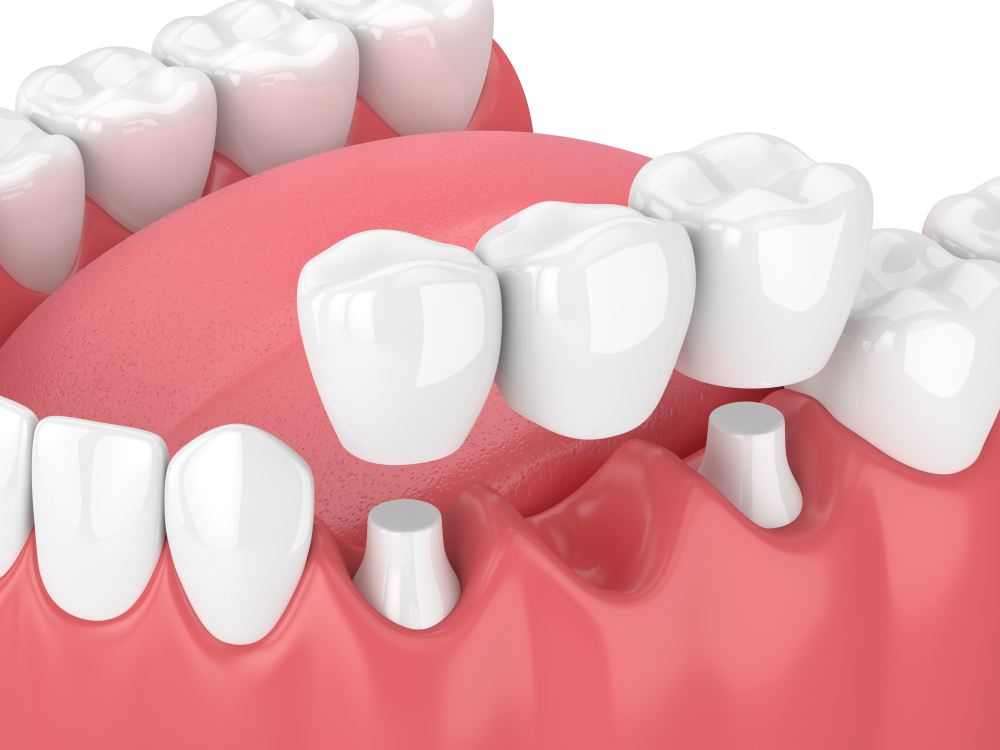
A traditional dental bridge takes a different approach. Instead of anchoring into the bone, it uses the two healthy teeth on either side of the gap as supports. Those neighboring teeth are shaped down and capped with crowns, and a false tooth, called a pontic, is suspended between them to fill the gap. The whole unit is cemented in as one connected piece. There are also implant-supported bridge designs for larger gaps, which you can read about on our implant bridge page.
The Big Difference: What Happens to Your Neighboring Teeth
This is the single most important distinction for many patients. A traditional bridge requires permanently altering the two adjacent teeth. Even if those teeth are perfectly healthy, they must be ground down to make room for the supporting crowns. Once enamel is removed, it does not grow back, and those teeth will always need to be capped from that point forward. If one of the support teeth later develops a problem, the entire bridge can be affected.
A single implant, by contrast, is completely self-supporting. It sits in its own space and leaves the surrounding teeth untouched. For patients whose neighboring teeth are strong and healthy, many dentists consider this a meaningful long-term advantage, because it preserves more of your natural tooth structure. That preservation is one of the reasons implants have become such a popular choice in Burke, Fairfax, and Springfield.
Comparing the Two Side by Side
Here is a simplified look at how single tooth implants and traditional bridges tend to compare. Individual results always depend on your specific mouth, health history, and habits, so treat this as a starting point for a conversation rather than a guarantee.
- Neighboring teeth: Implants leave them untouched, while traditional bridges require grinding down the two adjacent teeth.
- Bone health: Implants stimulate the jawbone and help slow bone loss; bridges do not, so bone under the gap can continue to shrink.
- Longevity: Implants often last decades and sometimes a lifetime with good care, while bridges commonly need replacement roughly every 10 to 15 years.
- Timeline: A bridge is usually finished in a few weeks, while an implant typically takes several months to allow the bone to heal and fuse.
- Upfront cost: A bridge is generally less expensive at first, while an implant costs more initially.
- Cost over time: Because implants tend to last longer and rarely need replacement, they can become more cost-effective across many years.
| Factor | Single-Tooth Implant | Dental Bridge |
|---|---|---|
| Neighboring teeth | Leaves surrounding teeth untouched | Requires grinding down the two adjacent teeth |
| Bone health | Stimulates the jawbone and helps slow bone loss | Does not stimulate bone, so it can shrink |
| Longevity | Often lasts decades, sometimes a lifetime | Commonly needs replacement every 10 to 15 years |
| Timeline | Typically takes several months to heal and fuse | Usually finished in a few weeks |
| Upfront cost | A larger initial investment | Generally less expensive at first |
| Cost over time | Can become more cost-effective across many years | May need one or more replacements over the years |
Bone Health, Longevity, and Cost Over Time
One advantage of implants that is easy to overlook is what happens beneath the gum line. Because the titanium post acts like a root, it keeps the jawbone active and stimulated. A bridge only sits on top of the gums, so the bone under the missing tooth is not stimulated and can gradually shrink. Over many years, that can affect the fit of the bridge and the appearance of your smile and jawline.
Longevity follows a similar pattern. Bridges are durable and reliable, but they typically need to be replaced every decade or so as the supporting teeth and gum tissue change. Implants have one of the highest long-term success rates in dentistry, and while nothing is guaranteed, many people keep the same implant post for the rest of their lives, replacing only the crown if it wears down.
Cost is where many patients feel the tension. A bridge usually costs less up front, which makes it appealing if budget is the immediate concern. An implant is a larger initial investment. But when you factor in the potential for one or more bridge replacements over 20 or 30 years, the lifetime math often narrows considerably. We break the numbers down further in our guide on dental implants versus bridges.
Which Option Is Right for You?
There is no universally correct answer, and an honest dentist will tell you that both options have a place. A single implant is often the better long-term choice when your neighboring teeth are healthy and you want to avoid altering them, when you want to protect the bone in the gap, and when you have enough bone density and general health to support surgery and healing. Many patients in the Burke and Annandale area choose implants specifically for these long-term benefits.
A traditional bridge can be the smarter fit when the teeth next to the gap already have large fillings or crowns and could benefit from being capped anyway, when you want a faster timeline, when a health condition makes surgery less advisable, or when the lower upfront cost matters most right now. Certain habits, medications, or conditions such as uncontrolled diabetes or heavy smoking can also influence which option heals more predictably.
The only way to know for sure is a thorough exam, including X-rays or a scan to check the health of your bone and surrounding teeth. Dr. Ghorbani and the Shield Dental Care team in Burke, VA, will walk you through what your mouth realistically supports and what each path would look like for you. If you are ready to explore your options, our new patient page makes getting started simple, or you can reach out through our contact page.
Frequently Asked Questions
Is a single tooth implant better than a bridge?+
Neither is universally better; it depends on your situation. Implants preserve neighboring teeth and support bone health, while bridges cost less up front and are faster to complete. An exam with Dr. Ghorbani helps determine which fits your mouth and goals best.
Does a dental bridge damage the teeth next to it?+
A traditional bridge requires grinding down the two teeth on either side of the gap so they can be capped with supporting crowns. This permanently removes enamel from otherwise healthy teeth, which is why many patients with strong neighboring teeth prefer an implant instead.
How long does a single tooth implant last compared to a bridge?+
Implants often last decades and sometimes a lifetime with good care, though the crown on top may eventually need replacing. Traditional bridges are durable but typically need to be replaced roughly every 10 to 15 years, though individual results vary.
Which is more affordable, an implant or a bridge?+
A bridge usually costs less up front, while an implant is a larger initial investment. However, because implants tend to last longer and rarely need replacement, they can become more cost-effective over many years. We can review pricing and any insurance benefits during your visit.
Replacing one tooth comes down to a trade-off between preservation and speed. An implant stands on its own, leaves neighboring teeth untouched, stimulates the jawbone, and can last decades, but costs more up front and takes several months to heal. A bridge is faster and less expensive initially, yet requires grinding down adjacent teeth and typically needs replacing every 10 to 15 years. An exam determines which fits your mouth.